
1. Introduction:
Even though platforms keep changing and new devices are taking over, people still turn to social networks both to acquaint themselves with new products or businesses that catch their interest, and for information about buying decisions. Therefore, it is an indispensable part of any heuristic marketing strategy in the present day.
By 2025 social media had evolved beyond mere entertainment, into the main place people look for things. It was a customer service center, a gathering spot for communities and an express route to purchase. Users expect that a brand should always be there when needed, communicate clearly, and offer intriguing content that matches their interests.
Brands that fail to use social media limit their reach. On the other hand, those which understand it and do it well can develop better relationships with customers, build trust, and guide them through the process of purchasing. Simplicity in using social media makes it easy for any company to keep in-step with current trends.
2. What Social Media Marketing Really Means in 2025
By 2025, social media marketing will be completely different. It ‘s no longer about posting photos here or there, but is instead an entire strategy for building personal relationships between a brand and its consumers, earning customer confidence over time short of which there will be no sales. Everything done on social media generates impressions that affect people’s opinions of a brand and whether it ‘s worth having anything to do with it.
2.1 More Than Posting Content
A unified social media presence covers several moving parts:
- Brand statement communicating its identity and values
- Community construction that cultivates involvement and affection
- Customer service that gives clear, quick answers
- Building trust by being helpful and open
This combination enables brands to align with generational changes while avoiding being swept away in them.
2.2 The New Social Ecosystem
The performance of content has evolved. Short video reigns in discovery; creators influence user purchase; and paid content and organic content together help every other post achieve more reach. Brands in 2025 need to understand how these pieces fit together to present a lively and effective face. A simple and flexible approach means that in 2025 a brand can continue to be present, change quickly, and meet the needs of its audience.
3. Core Pillars of a Strong Social Media Strategy
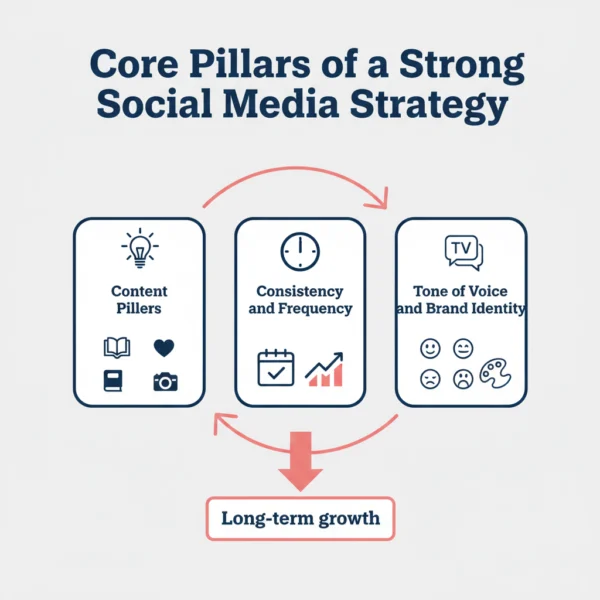
The vital elements for creating successful social media strategies build on others too. With these pillars, a brand can be consistent in its communications, so that readers know exactly what was said to them regardless of time and place. And it also amounts to fresh content that browsers really want to see. When these elements are combined in the right way, social media becomes a steady and predictable way to achieve visibility, long-term growth and other positive outcomes.
3.1 Content Pillars
The content pillar is the cornerstone of every post a brand makes. Each piece of content within needs a clear destination and message only then will it really communicate with real people. With some pillars this becomes an easy task.
Common content pillars may include:
- Educational content in the form of learning materials and do-it-yourself recipes.
- Inspirational prose which strikes the happy note and leaves one inspired to carry on after reading it.
- Product-focus, information that emphasizes how important certain features are and why.
- Community centric content, from a broad representation of benefits, half-finished thoughts or snapshots of life in the raw as seen through a camera lens.
These pillars help keep balance between sections and stop the feed from becoming too boring or seem disconnected.
3.2 Consistency and Frequency
Brands who are present on social media daily reap the reward of that busyness. With consistency, people remember you and trust you for longer term benefits. It didn’t mean daily posting. You need a reliable rhythm that reflects what your brand can keep up with and also meets the expectation of an audience. A constant heartbeat creates familiarity and keeps interaction levels flat over time.
3.3 Tone of Voice and Brand Identity
A recognizable voice in writing will help your audience to know and access the “feel” of your brand quickly. It can be friendly, professional, playful, or tranquil depending on what suits the company’s character. Brand identity also includes visual style which should remain the same across posts, stories, and videos. A strong identity helps parts hang together as one unit.
4. Choosing the Right Platforms for Your Business
The users who gather on Facebook, Instagram and Twitter each have different interests. Each of these platforms is conducive to different forms of content. Good social media strategies will focus only on the platforms that are consistent with the brand’s goals, behavior of the audience, and style of content preferred by those people. By choosing the right platform, a business can avoid wasting its resources and instead reach the people who are more likely to engage.
4.1 Instagram
Instagram is still a place where visuals matter. Photos, carousels and videos help brands to present themselves, their products and lifestyle. Reels play an essential part in subject discovery and are often the fastest way to connect with a new audience. Instagram is best suited for businesses that depend on an aesthetic attraction, for example fashion, inspiration and consistent interaction.
4.2 TikTok
TikTok generates rapid discovery and flourishes on creativity. Trends and short stories have made content shared at an unprecedented level. Businesses that adapt rapidly and really show their true image will often produce results. TikTok is best for the brands that want to reach younger audiences with attention to culture driven behaviour.
4.3 Facebook
Facebook continues to support longer discussions, community building and group interactions. For audiences that seek detailed communication and familiar formats, Facebook remains relevant. Brand pages and groups can offer a site of trustworthiness for brands to conduct customer support.
4.4 LinkedIn
LinkedIn offers a platform for professional positioning. Brands use it to reveal their expertise, industry insights and company’s news. It is particularly effective for firms and consultants who work in the services sector and wish to establish an authority in that industry.
4.5 YouTube
YouTube supports long form content which lasts for years. Tutorials, reviews, deep dives into a subject and educational videos perform well. That makes it a good bet for a brand which would like to combine search exposure with powerful storytelling.
4.6 How to Choose Based on Goals Rather Than Trends
Choosing the right platforms for your business depends on the brand goals and behavior of the ideal customer. If your aim is to be quickly noticed, for example, TikTok and Instagram may take priority. If you need to be seen as a professional, that’s where LinkedIn comes in. If the brand is in search of evergreen content look to YouTube for long term value.
5. Content Creation That Drives Engagement
Social media growth is at the core of engagement. If content can catch people’s attention and encourage interaction, platforms will expand its coverage. On each platform, well-crafted content reflects the interests and questions of the audience. It supplies information in a natural way that feels right at home there. If intelligent content succeeds in doing this, its content will still be relevant to people in 2025.
5.1 Understanding What People Interact With in 2025
Audiences have changed. People on social media want content which is real, practical, and easy to understand.
They want:
- Clear value within 3 seconds
- Simple visuals
- Stories that could have happened to anyone
Information that solves a problem or obviates a confusion They use it to shape content.
5.2 Short Form Video as the Primary Growth Engine
Short videos are still fastest to reach new audiences. Quick explanations, product introductions, behind the scenes clips, and short storytelling all work. These videos help brands convey their personality and benefits to potential customers without asking for too long an attention span. The format is suitable for both educational and entertainment articles.
5.3 Static Posts, Carousels, and Long Captions
Static content still has an important role. Carousels can break people through things step by step and make them swipe. Single images are also good for announcements or product details. Long texts add context, clarify benefits and provide depth. They complement short form videos’ reach with valuable detail.
5.4 Story Content for Daily Brand Touchpoints
Stories offer a lower-touch way of staying in touch. Quick updates, polls, countdowns and daily moments all help to keep up familiarity. Even light interactions in stories remind people of the brand’s presence and build faith over time.
5.5 Using User Generated Content to Build Real Trust
User generated content continues to be one of the most convincing forms. Real customers sharing their experiences, reviews and product results are trustworthy and credible. This sort of content makes it easier for new audiences to face up with the brand, and has a boosting effect at purchase time.
6. Paid Social Media Advertising Explained Simply
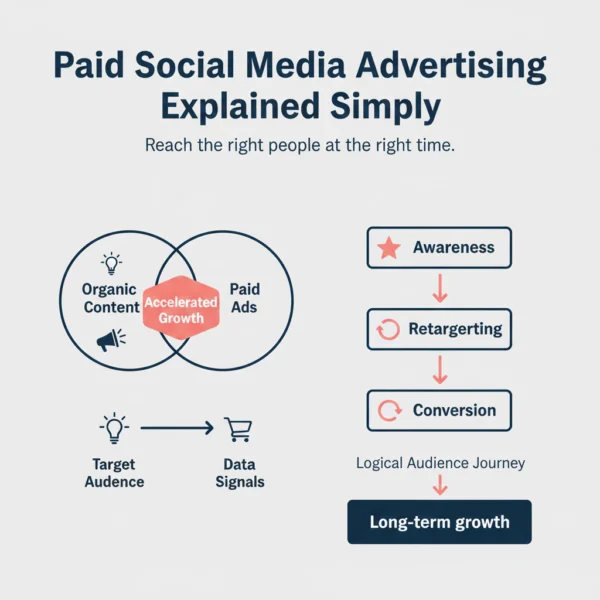
Paid social media advertising enables the brand to reach a larger audience and validate that it is growing beyond organic reach. When used properly, paid social media ads help you deliver important information or “the right message” to the correct audience at just the time they need it. When combined with strong organic content, paid ads are a powerful method for obtaining visibility and engagement in a consistent manner.
6.1 Why Paid and Organic Must Work Together
Organic content builds brand trust and gives it a particular human voice. Paid ads amplify this content. Importantly, they reach people who have not yet been exposed to the brand. When both types of content overlap, the audience grows even quicker and conversions become more predictable. Paid ads also allow brands to get past the natural limitations of organic reach.
6.2 Types of Paid Campaigns
Paid ads include several categories of campaigns. Each is designed for a specific purpose, depending on its features and cost.
- Starting an Awareness Campaign – These campaigns introduce the brand to fresh audiences.
- Retargeting Campaigns -These reconnect with users who have expressed interest.
- Conversion Campaigns – These campaigns are designed to generate orders.
These campaigns arrange the audience from discovery to behavior in a logical way.
6.3 The Value of Audience Targeting and Data Signals
Paid platforms gather powerful data on how people behave. In this way, these data enable advertisers to show ads to people who are most likely to engage or buy. By choosing interest-based audiences, lookalike groups, and behavioral signals, brands ensure their ads are reaching the right people. This improves efficiency and makes it easier for every campaign to produce good returns.
7. The Role of Social Media Algorithms in 2025
Algorithms determine how and who receives posts. Brands charge algorithms with child-serving criteria in order to create content that gets seen without need for luck. In 2025, algorithms key off user satisfaction, relevance, and ongoing interaction. Following these trends, companies that align with those priorities not only have a bigger reach but are also more likely to achieve sustainable engagement.
7.1 How Modern Algorithms Prioritize Content
Groups algorithm-developed content by whether it may be useful (or interesting) to those it’s been presented to. They consider a great many factors in making their evaluation include: Early interaction statistics keeps you from getting caught attempting something that doesn’t work with the audience, and retention or quality are for various sorts of transactions done without need on both sides. If a post is questioned briskly, the site deems it good and shows it to more people.
7.2 Engagement Signals That Matter
Not all forms of engagement are equal. Platforms take notice of important signals such as:
- Comments indicating genuine interest
- Shares bringing new viewers
- Saves showing long term value
- Repeat views on videos
- Profile visits after seeing content
These signs help algorithms understand whether the content has any appeal in terms of presenting it to a wider audience.
7.3 How Businesses Can Align With Algorithm Behavior
Brands don’t need to chase trends; they need to make content that grabs people’s attention, promotes interaction and conforms to what people find familiar. This will involve posting regularly, responding to comments, using formats that work well, and keeping the message clear. Brands following this policy will naturally enjoy the favor of the algorithm; their reach grows more.
8. Community Building as a Long Term Growth Asset
On social media a strong community makes a brand steady. When people feel connected to a symbol, they communicate frequently, distribute content happily, and trust those recommendations. Nor is community building about rapid growth. It is creating a friendly place to patronize where people feel that they are seen, understood and valued. Long term participation guarantees your success across all platforms.
8.1 Comment Management and Active Communication
Communities begin with conversation. Whether it is responding to comments, answering questions or receiving feedback does the brand appear. Even such simple contact helps to create a sense of familiarity. When audiences feel that they are heard, they return and engage more often and are also more likely to recommend the brand to friends. Consistent communication can also tell the platform that your account is alive and current.
8.2 Groups, Chats, and Private Communities
Some platforms provide new ways for brands to foster closer relations. Facebook groups, Instagram broadcast channels and personal communities provide more in-depth discussions with selves and together. Community members often buy more goods and tell others about a brand because they feel that they are part of something meaningful.
8.3 Building Brand Loyalty Through Interaction
Loyalty takes time and reinforcement to grow. If a symbol replies sincerely, is truly seen as a useful source of contents, while also maintaining an accessible tone for itself, then followers begin to trust within the. This trust gradually comes to affect choices and is a fertile bed for spontaneous word of mouth growth over time. Loyal audiences also help to shore up your influence during algorithmic changes because they naturally engage with new content.
9. Tracking Performance and Understanding Analytics
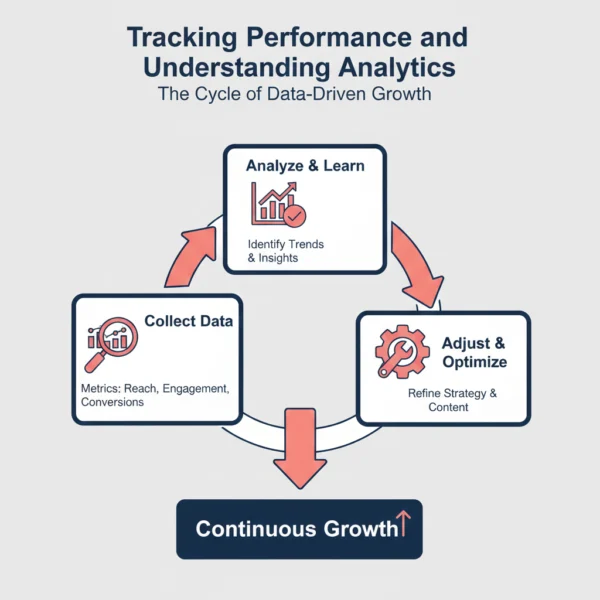
Because of analytics, we can know very well how social media activities are working as well as where there remains some room for improvement. With that information in hand, a brand can generate better content, refine its strategy, and concentrate on those actions which will cause genuine growth. Also tracking results helps to prevent guesswork and provides clarity about what the audience responds to best.
9.1 Core Metrics to Monitor
A number of metrics figure in one way or another to performance. Each one reflects some aspect of the journey taken by an audience.
- Reach shows how many people saw the content
- Engagement is likes, comments, and other forms of interaction
- Saves suggest long term value
- Shares bring new viewers
- Clicks indicate interest in learning more
- Conversions tell us how many people took an action
When collected together these metrics show the pattern of what kind of content attracts attention and what induces people to act.
9.2 How to Evaluate What Is Working
Performance patterns can guide decisions for the future. If certain forms consistently earn more engagement, they can now be given priority. If specific topics result in more saves or shares, then they may even become standing themes. Where a post achieves high conversions, it demonstrates a close correlation between the interests of the audience and those aspects desired most by the brand.
Arrangement should be according to trends not individual spikes. This approach provides a truly practical understanding of what the audience appreciates.
9.3 Adjusting Strategy Based on Data
Analytics only becomes useful as a foundation for informed changes. Brands might adjust posting frequency, refine content pillars, change messaging or they may experiment with new formats based on what their statistics indicate works best. This means that in practice the strategy stays current with audience behavior. Adjustments guided by data help maintain steady growth and keep the brand from having to rely on assumptions.
10. Common Mistakes Businesses Make on Social Media
Many businesses on social media are like Olaf without a compass. Either they are focusing on the wrong activities, or neglecting basic elements. Once these common mistakes are understood, there is a minimum of wasted effort and gradual long-term growth.
10.1 Posting Without Strategy
Random posting almost means dead connections. No clear purpose leads to confused brands and incomprehensible content for an audience that has no clue what the hell it just read. With a strategy, each post on social media can be seen as serving some goal: awareness (of what?), learning or conversion. This makes a mess into something coherent enough for someone else to believe they would buy it.
10.2 Ignoring Consistency
When the posts are spread too unevenly, audiences slip away and brands grow dim in their eyes. After not too long, nobody sees new content when it arrives. Consistency in posting doesn’t always mean multiple times a day. But it does mean a steady beat that your audience can count on.
10.3 Relying Only on Trends
Trends can amplify reach, but relying on them things can go awry. Trend-based content will tend to bring rapid attention; by and large though, it rarely fosters long-term loyalty. If you mix in some lasting strength as well as fashion today then the result is more solid. This allows the brand to stay topical without losing its individuality.
10.4 Not Understanding the Audience
Some companies are content to post what they themselves like rather than what their audience will find valuable. When you do not take heed of what your audience really needs, wants, or problems are, Posts often feel unrelated. Audience insight produces content that is relevant, helpful and engaging. When it suits people’s real desires, content does better.
11. Conclusion:
Social media marketing in 2025 remains one of the most effective ways for businesses to build visibility, connect with customers, and influence buying decisions. Despite constant platform changes, the core principles stay the same. Audiences respond to clear communication, consistent presence, and content that reflects their interests and needs.
A strong strategy focuses on choosing the right platforms, creating meaningful content, and building a community that feels supported and valued. When brands combine organic content with smart promotion and data guided decisions, social media becomes a stable and predictable part of their marketing system.
The goal is not to follow every trend or post endlessly. The goal is to create a clear identity, understand the audience, and show up with content that serves a purpose. With this approach, social media becomes simpler, more manageable, and far more effective.
Are you struggling to get more traffic?
Run a free SEO analysis to uncover site issues, competitor gaps, and ranking opportunities.