Why Healthcare SEO Needs a Funnel Approach
Most healthcare organizations focus on keywords, rankings, or website traffic, yet those numbers alone rarely translate into new patients. What truly drives patient growth is a system that understands how people move from curiosity to trust and eventually to booking an appointment. That is the role of a well-structured healthcare SEO funnel.
In healthcare, decisions take time and emotion plays a large part. Patients are not buying a product; they are choosing someone to trust with their health. A person might begin by searching “why do I get headaches every morning” and only after several days or weeks start comparing clinics or reading doctor reviews. Between those two moments lies a series of small but critical steps. Each one involves research, reassurance, and relevance that your SEO strategy must connect.
A funnel approach aligns every layer of your digital presence. Informational content like blogs and guides builds awareness. Service pages and doctor profiles establish credibility. Local SEO and appointment-focused calls to action turn that trust into action. Each step strengthens the next, creating a smooth journey from discovery to decision.
Without that structure, even high-ranking pages lose potential patients. Visitors read the information but find no guidance on what to do next. When a funnel is intentionally designed, every page has purpose. It either informs, convinces, or converts.
Healthcare SEO, therefore, should not be seen as a collection of rankings. It should be treated as a guided path that begins with a question and ends with a confirmed appointment.
Understanding the Patient Journey in the Digital Era
Every healthcare decision begins with a question. People don’t usually land on a clinic’s website ready to schedule anything. They start by figuring out what their symptoms might mean, scrolling through possible causes, and searching for advice that feels reliable. This first stage is all about awareness, and it often happens long before anyone thinks about calling a doctor.
As they keep looking, their searches change. Someone might begin with “what causes lower back pain” and, a few days later, type “physiotherapy for back pain near me.” That small shift says a lot. It shows how the patient journey works, not as a straight road, but as a path made up of many small steps where curiosity slowly becomes trust, and trust turns into action.
Once you understand this process, it’s easy to see how different content plays different roles. Articles and blogs answer early questions. Service pages help when people are closer to a decision. Reviews, patient stories, and doctor profiles do something deeper, they reassure and build confidence. Together, they move readers closer to care without ever feeling forced.
Modern patients expect healthcare providers to show up online in a real and supportive way. They’re not only checking who offers a service; they’re judging who seems knowledgeable, kind, and honest. A solid online presence shows all of that naturally.
That’s why a strong healthcare SEO funnel should feel like the journey real patients already take. When your online content follows that same path, you stop guessing and start building steady, genuine trust.

Stage 1: Awareness: Being Found When Patients Start Searching
The first stage of a healthcare SEO funnel starts long before anyone books an appointment. It begins the moment a person feels unsure about a symptom and looks it up online. They are not seeking a provider yet. They are searching for understanding, for possible causes, and for simple guidance they can trust. That first search is your earliest chance to earn credibility.
Your goal at this point is to appear right where those questions live. Create content that is clear, calm, and genuinely useful. Use the words people use when they describe how they feel. Blog articles, FAQs, and guides tied to specific conditions work especially well because they meet readers at the exact moment they need help. These pages are not sales pitches. They are accurate, helpful resources.
Keywords matter, but intent matters more. Consider a query like “why is my skin always itchy.” That person is not ready to see a dermatologist. They want reassurance and an explanation that makes sense. A straightforward article that outlines likely causes, cites credible sources, and offers practical next steps can make your clinic a trusted name. When they move toward treatment, they will remember you.
Visibility here depends on technical care and thoughtful writing working together. Schema markup, structured data, and fast loading pages help search engines understand and feature your content. Clarity, empathy, and a professional yet friendly tone help people stay longer and explore more.
The awareness stage is about showing up before competitors do. It is where authority takes root. Once that presence is consistent, the next step is guiding readers to see why your expertise stands out among the many voices they find online.
Stage 2: Consideration: Building Trust Through Expertise
Once people understand more about their symptoms or possible conditions, their focus shifts toward finding professionals they can trust. At this stage, general information is not enough. They want proof of credibility, real experience, and a sense of reassurance before taking the next step.
This is the point where your online presence needs to show expertise clearly. Every part of your website should reflect skill, care, and professionalism. Service pages should explain what you offer in simple, confident language and clarify why your approach works. Doctor or specialist profiles should highlight background, experience, and personality. Reviews and testimonials should reinforce results. Together, these details help visitors feel certain that they have found someone reliable.
Search engines pay attention to the same things people do. They look for evidence of authority and trust through accurate information, verified credentials, and reputable links. Google’s focus on experience, expertise, authority, and trust (E-E-A-T) applies strongly to healthcare. Each page that demonstrates genuine knowledge and honesty strengthens your standing with both patients and algorithms.
Real stories can make this stage more personal. For example, sharing how a patient’s recovery improved through a particular treatment shows your care in action. Photos of your team, your clinic, or daily work add warmth and credibility. These small touches bridge the gap between information and human connection.
The consideration stage is where awareness becomes personal. Once trust forms, patients naturally begin to move toward a decision, which leads into the next phase of their journey.
Stage 3: Decision: Turning Interest into Appointments
When someone reaches this point, they already believe you can help. They’ve looked through your pages, maybe compared you with a few others, and now they just need a clear next step. The decision stage is where curiosity turns into an appointment, and that shift happens only when moving forward feels easy.
Good websites make that step simple. Booking links sit where people expect to find them. Contact details are obvious. Forms take only a few quick fields to complete and work smoothly on a phone. Even the small wording choices matter. “Book a consultation” sounds welcoming; “Submit form” does not. Little differences like that often decide what happens next.
Local presence plays a big part as well. Most people want a clinic close to home. Keep your Google Business Profile current. Check that your name, address, and phone number match everywhere, and keep gathering fresh reviews. These habits make your practice show up more often for local searches and help people feel you are nearby and real.
The page where someone books should build confidence at a glance. Use short, clear explanations of each service. Add a few reviews that sound genuine, show accepted insurance plans, and explain briefly what the first visit looks like. Those details calm hesitation and make the choice feel safe.
When everything works together, booking feels natural. No pushing, no confusion. It gives the impression of a clinic that respects time and communicates clearly. Carry that same tone across emails, ads, and social posts so the experience stays steady from the first search to the moment the patient walks in.
Integrating SEO with Paid and Social Channels

Good healthcare marketing never relies on one channel. People rarely find a clinic and book right away. They bounce around a bit. Someone might read a blog, then check reviews on Google, notice a sponsored post, and only later end up on your site. When those moments connect, awareness and trust build quickly.
SEO gives you steady visibility over time. Paid ads help when you want faster results, like promoting seasonal checkups or a new treatment. Using both together lets you learn faster. The keywords that bring clicks in ads can guide which terms you focus on for organic content. Each channel teaches the other.
Social media adds the human side. A few short updates on Facebook or Instagram can show the faces behind the practice. Sharing tips, small wins, or quick reminders makes your clinic feel approachable. People might scroll past at first, but the name sticks. When they search for care later, it feels familiar.
Email keeps that thread going. Someone who downloaded a guide or asked a question can get gentle follow-ups, updates, reminders, or a small bit of advice. These messages aren’t about pushing a sale; they simply keep your clinic in view until the person is ready to take action.
When all of these pieces use the same tone and message, the experience feels smooth. Patients sense consistency and honesty. It stops feeling like marketing and starts to feel like guidance. The result is a path that attracts people, keeps them interested, and helps them reach care when they need it.
The next step is to look closely at how each stage performs and track the numbers that show real patient growth.
Measuring Funnel Success: Metrics That Matter
Any good marketing plan needs proof that it’s actually working. In healthcare, that proof usually hides in the small details. Every time someone lands on your website, reads a bit, or calls the office, they leave a clue about what caught their interest. Paying attention to those clues helps you understand what’s doing its job and what might need to change.
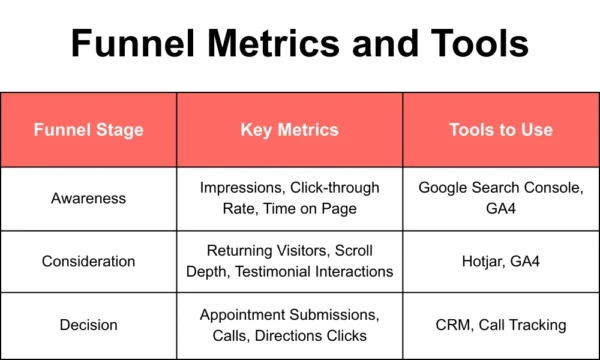
Start simple. Look at each part of your funnel on its own. In the awareness stage, notice how often your pages appear in search results, how many people visit, and how long they stay. Those numbers tell you whether your content is reaching the right audience. In the consideration stage, check if people come back, click into your services, or spend time reading about your doctors. That’s usually a sign that trust is forming. And when it comes to the decision stage, focus on clear actions like calls, bookings, and contact forms being completed. That’s where curiosity becomes commitment.
Use easy tools to gather all of this. Google Analytics and Search Console are good starting points. A heatmap or scroll tracker can show where people stop reading, and conversion tracking tells you what finally makes them act. Connecting this information with your CRM or phone logs lets you see which searches lead to real patients, not just visitors passing through.
A helpful way to organize this data is through a simple table that lists metrics by funnel stage.
For example:
If you’re also running paid ads, compare what’s happening there. Ads show quick results. SEO shows slower but steadier growth. Looking at both together helps you see where your time and money matter most.
Keep reports regular and straightforward. They don’t just count how many people came to your site; they show how many took steps toward care. Once you know that, the next move is easy. Use what you’ve learned. Adjust what needs fixing. Keep what’s working. Over time, this is how the whole funnel gets stronger and more effective.
Building the Funnel with Technolangs Solutions
Creating a healthcare SEO funnel takes more than adding keywords or redesigning a few pages. It needs a clear plan that ties visibility, trust, and patient experience together. At Technolangs Solutions, that connection is built carefully, step by step, so every part of the process works in sync.
Each project starts with a close look at where the healthcare brand stands. The team reviews how patients move through the site, which pages attract them, and where attention drops off. These details become the base for a new strategy, one that blends structure, intent, and useful content.
From there, the process moves through each stage of the funnel with equal focus. In the awareness phase, the team creates educational content that is search-friendly and genuinely helpful. During consideration, the work shifts toward showing real expertise through well-written service pages, detailed doctor profiles, and stories from patients. When it’s time for the decision stage, design and local SEO come together to make booking quick and comfortable.
Technology and human insight guide every step. Data tools help track progress, but interpretation and improvement come from experience. Campaigns are reviewed often and updated to match how patients search, how algorithms evolve, and how behaviors change.
The outcome is a system that does more than rank well, it performs steadily. Clinics and healthcare groups working with Technolangs Solutions often see clear growth in quality website visits and confirmed appointments. More importantly, their digital presence starts to feel consistent, professional, and reassuring for patients.
Once the funnel is built, keeping it healthy becomes the next goal. Just like patient care, SEO success depends on regular checkups, careful monitoring, and ongoing improvement.
Conclusion:
A good healthcare SEO funnel isn’t just about getting people to visit a website. It helps them move through a journey, starting with curiosity, finding understanding, and ending with the confidence to seek care. Each stage matters, but the real impact comes when everything connects. Awareness makes your clinic familiar, consideration builds trust, and the decision stage turns that trust into growth.
When all of these parts work together, it changes how a clinic shows up online. A blog post, a doctor’s profile, even a simple appointment form become part of one continuous experience. To the patient, it feels natural and reassuring. It shows that your brand listens, teaches, and guides instead of simply trying to sell.
For clinics that want consistent, steady growth, this kind of system isn’t optional anymore. It’s the base of real digital credibility. With the right plan and constant care, SEO stops being just a marketing task. It becomes something bigger, an extension of patient experience that keeps working quietly in the background long after the campaign ends.
Technolangs Solutions helps healthcare providers build that connection. The team studies how people search, what makes them stay, and how to turn interest into trust. Over time, this approach creates something lasting: visibility that brings results, and relationships that keep growing.
Are you struggling to get more traffic?
Run a free SEO analysis to uncover site issues, competitor gaps, and ranking opportunities.