1. Why SEO Is More Than Rankings
It is generally thought that search engine optimization helps your page to get higher rankings in the search results, This however is only one part of its true significance. The influence of SEO marketing is more comprehensive than simply your rankings.
If SEO is undertaken correctly, it helps search engines know what your website is about and how credible a choice it represents. At the same time, it makes information more accurate for users to locate, can guide them through navigation easily and gives added confidence they are selecting a reputable name brand. This dual impact of SEO serves as the basis rather than an isolated marketing measure.
Unlike short term campaigns which stop delivering the moment that they spend their budget, SEO continues to work. Pages that obtain visibility and credibility can attract traffic for months and even years to come. This ability to maintain and amplify for the long haul is in fact why many consider SEO as one of the safest strategies in pursuing sustainability.
2. How SEO Builds Trust With Users and Search Engines
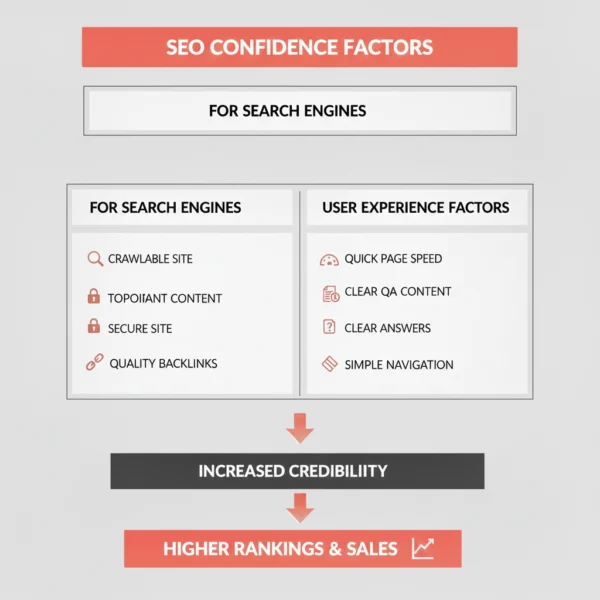
To be honest, trust is an important goal for search engine development. The role of SEO in building trust is to make website performance, appearance and interactions seem more reliable and suited to use. If SEO is used properly, it will mean trust, not only to search engines but also to live people visiting your site.
Trust Signals From a Search Engine Perspective
Search engines take many factors into account in deciding if a website should be visible. Many indicators show these to be reliable information sources.
Key trust indicators include:
- Clear site structure that is easy to crawl and understand
- Consistent and relevant content aligned with search intent
- Secure browsing experience through HTTPS
- Fast loading pages and stable performance
- Natural backlinks from credible sources
When these elements work together, search engines gain confidence that the website provides genuine value.
Trust Signals From a User Perspective
Users assess trust rapidly. They subconsciously judge a site for credibility the moment they first come into view, long before thinking deeply about whether its content might help them.
SEO supports this by ensuring:
- Pages load quickly without friction
- Content answers questions clearly
- Navigation feels simple and logical
- Information appears accurate and well structured
When users trust a website they stay longer, look at more pages, and come back later. These behaviours reward search engines with more confidence signals.
3. SEO Creates Sustainable Traffic That Grows Over Time
SEO is an internet marketing channel that does not incur a steady expense. Unlike the paid channels, when their budgets are over stopped, I saw it more or less dying out. SEO makes more and provides more in return. Google’s emphasis on relevancy means that high-rank content will always ride the crest of its success, and grows with time. The longer you stick with this type of optimization, the stronger your results.
Once a website is ranked highly for certain searches, though, it becomes as steady and permanent an information outlet as any newspaper can hope to be. The readers that arrive via such traffic are quick to find both products they need and information wanted for their work with clear intent, both of which can effectively increase user engagement rates and also the likelihood of achieving your intended goals.
3.1 Organic Traffic Comes from Real User Intent
Traffic from search comes from users who are looking for answers or solutions. You use search engines to do this. Where a website turns up in the response usually depends on the exact moment, ready to perceive or remember any combination of words that occur during an advertisement which interests him. At least once a month, people who read newspapers see ads in it that interest them most because they are likely those such as their customers and friends might have bought as well. That’s the only time they will not turn away from an advertisement offering these sorts of products.
This kind of uninterrupted traffic is more valuable. Visitors come to the website of their own free will, which means that you get better engagement and fewer bounces.
3.2 Traffic Stability Compared to Paid Channels
SEO focuses on sustainable visibility. A well-optimized page will attract traffic over a period of time months or even years for minimal additional effort. Organic traffic means good business traffic. Better quality visitors who are much easier prospects for conversion to sales are those that do not bounce when they come to your site. This increasingly precious treasure would not be available if search users were overlooked or alienated and so ably dealt with by well structured SEO web pages.
Compared to paid advertising, SEO traffic offers:
- More consistent visibility over time
- Lower cost per visit in the long run
- Less dependence on daily budget adjustments
- Stronger compounding returns as content grows
This type of continuousness also makes it easier for businesses to plan for growth with greater confidence.
3.3 Content Accumulation Strengthens Traffic Growth
Each optimized page increases the probability of being found. As more collection-friendly pages are put into use, the website’s cover of search themes increases. It is also able to gather a wider range of users. This eventually results in a network of pages that both support each other and raise overall visibility.
Rather than relying on a single campaign or page, SEO develops traffic through an accumulation process. This approach is resource-building and risk slashing, so it confers long-term growth.
4. SEO Supports Long Term Growth Without Constant Spending
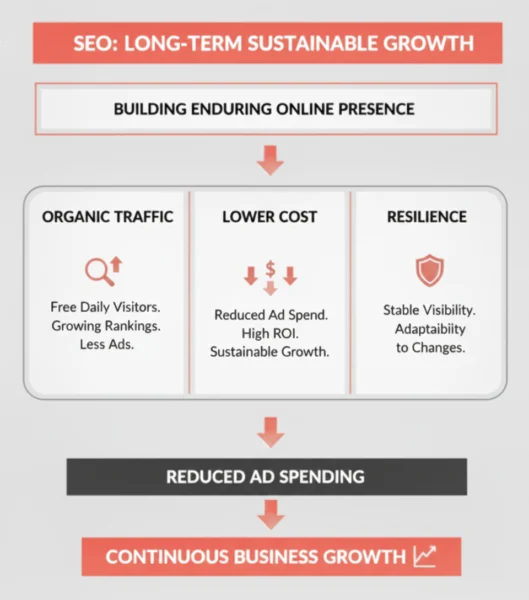
One of the greatest strengths of SEO is that it can keep producing results over time without requiring a continuous marketing budget in place. Unlike paid channels where visibility disappears as soon as the money’s empty, SEO builds a foundation that continues benefitting long after initial setup is finished.
4.1 Organic Traffic Compounds Over Time
When a web page ranks high in the results for relevant searches, it attracts visitors every day. Every optimized page is an asset of traffic over the long term. With higher ‘authority’ and more pages that rank, rather than a new set we have changes for webmasters or alterations to domain information, results get increasingly compounded.
This means a healthy stream of visitors actively searching for solutions, products, and services. Over time your company will rely less on paid advertising in order to bring its products or services to market.
4.2 Lower Cost Per Acquisition in the Long Run
While SEO needs investment in strategy, content, and technical improvements, it doesn’t require paying for every click or impression sent its way. Once rankings are established, traffic comes naturally and the cost per visitor goes to zero.
This makes SEO especially valuable for businesses focused on sustainable growth. As visibility increases, the cost of acquiring each new customer typically falls compared to paid channels.
4.3 SEO Builds Resilience Against Platform Changes
Paid platforms change the rules frequently, continually messing with their algorithms and charging for policies. Social reach drops, ad rates go up, choices for whom you can reach shrink. SEO is a buffer against this change by augmenting a business presence in search results where the intent of searchers is stable.
A well-optimized website keeps up its performance when other channels experience volatility. This resilience aids long-term planning and permits your enterprise to grow despite the market’s undulations.
5. SEO Delivers Long Term Results Unlike Short Term Marketing Tactics
One of the great advantages of SEO is the durability it provides. Unlike advertising or short-term campaigns, SEO delivers value for a long time past their initial work. For this reason it is a reliable source of new business growth companies who want what’s stable rather than those with spikes into temporally hip areas.
When a website commands strong rankings, visibility is consistent. Pages that do well can bring in traffic for many months, or even years, with only very slight alterations. This long term presence helps a business cut back on constant ad spending.
SEO Results Accumulate With Time For instance, once a website has been established, then over time all other activities will gain strength and combine with this driving force behind them. In this way we think it’s fair to say that long-term success comes from long-term effort.
Why SEO Results Compound Over Time
SEO builds momentum gradually. Each improvement strengthens the next stage.
- Quality content attracts steady traffic
- Consistent traffic increases engagement signals
- Strong engagement improves rankings
- Better rankings increase visibility and trust
This integrating effect makes SEO more powerful as time goes by.
Comparing SEO With Short Term Marketing Channels
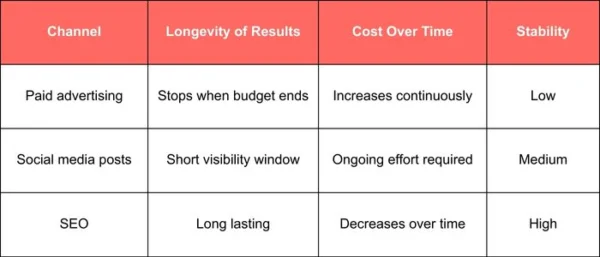
SEO isn’t meant to replace other marketing channels, but it does create a stable base that can support them all. When companies spend on SEO, they receive predictable traffic and trust over time, but even bigger rewards long-term returns from their efforts.
6. SEO Delivers Long Term Results Unlike Short Term Marketing Tactics
One of the biggest advantages of SEO is that it links generating traffic with conversions. For this reason, even if you’re asleep, your website will still be working for you or your client and bringing in business. Unfortunately not just traffic could be generated on-page SEO as many factors are interrelated in this process and a single change determines how long the user stays or what their journey is like.
6.1 SEO Builds Compounding Value Over Time
SEO is not a one-off campaign that disappears after you’ve finished the job. A well-optimized Web page, technical improvements, and earned backlinks all contribute to long-term results. When content wins authority and trust, it becomes easier for the search engine to give a higher ranking to more keywords related to the same topic.
- This compounding effect means:
- Old content keeps separating in new readers
- Ranking is hard to move, and rates of rise are gradual rather than smooth
- New pages piggyback off of the established authority
For a legitimate site the return on your time takes years to rise in domain name value.
6.2 Reduced Dependency on Paid Advertising
Paid ads can bring immediate results, but as soon as you cut the budget they are gone. SEO changes this situation by creating organic traffic that does not require continuous spending to keep it running and grow in scope.
Businesses that integrate SEO into their marketing plans enjoy:
- Non-stop user traffic without daily ad costs
- Poor cost effectiveness over time
- Clearer lead generation control for marketing
- More controllable growth
This shift allows marketing budgets to be used more strategically rather than reactively.
6.3 SEO Supports Business Growth at Every Stage
SEO is not only for the first companies to find growth or existing huge enterprises. By adjusting to their targets, it supports businesses throughout. New companies gain visibility and exposure. Growing firms extend their keyword coverage together into an additional broad area of information which reflects their growth-status. Established brands maintain the rankings that once were and dominate competitive search terms. Because SEO stays up with whatever phase business is in, this is true for longer afterwards than its initial installation ever could last.
7. SEO Creates Compounding Results Over Time
One of the deepest advantages of SEO is the way it stacks results. Unlike paid campaigns that stop delivering after you quit spending money, SEO keeps going with long-term results beyond the initial substantive work. Not only does each improvement make the next one easier but they work together to maintain growth over time.
When a site has better rankings, it attracts more visitors. From there, traffic ignites engagement signals. People stay longer and return for more; this is good for your SEO trust, which will drive up visibility even higher than before. Over time it becomes a virtuous cycle: get seen, get clicked more times than the rest, winning clicks lead to revenues, and good revenues make you stronger still.
SEO content also keeps on ticking. A page which has been well prepared for SEO might bring in visitors month after month with just a little proactive effort. As more and more pages perform well, the website as a whole builds a stronger overall presence in searches-this makes future SEO work an easier and more reliable accomplishment than otherwise possible. This effect will snowball greater and faster with every new post or update you make to your blog!
For companies looking at their long term survival, the payoff from this compounding process is huge. It ditches dependence on short term tactics and lays a digital basis for constant growth.
8. SEO Builds Long Term Results That Do Not Disappear Overnight
Chief among the benefits of SEO is its capacity to yield results that last. With paid media, once visibility ceases as promptly when expenditure ends, clearly one should expect no more traffic or leads from all the hard work
If a website ranks well for important searches, it will be discovered day after day. Pages which truly answer user questions, solve issues and are good matches for search intentions keep visitors around month in and month out. This permanence allows businesses to grow without having to keep topping up advertising.
Over time, SEO becomes increasingly stronger. Each page that receives optimization, each link that has been earned, every time a blog post is upgraded or technical improvements are made, further raises the overall affinity of your domain with search engines. So we have a situation where on entering this cycle a fresh piece of content now ranks faster and more effectively than it ever would have been able to in the days before straining for trust records.
Long term SEO results also mean stability. A business gets regular traffic and assured leads, while it isn`t falling down the contests in which it competes. This makes SEO more than simply another marketing tactic but rather a long-term asset that can help businesses reach their goals beyond short-term campaigns.
9. SEO Creates Compounding Value Over Time
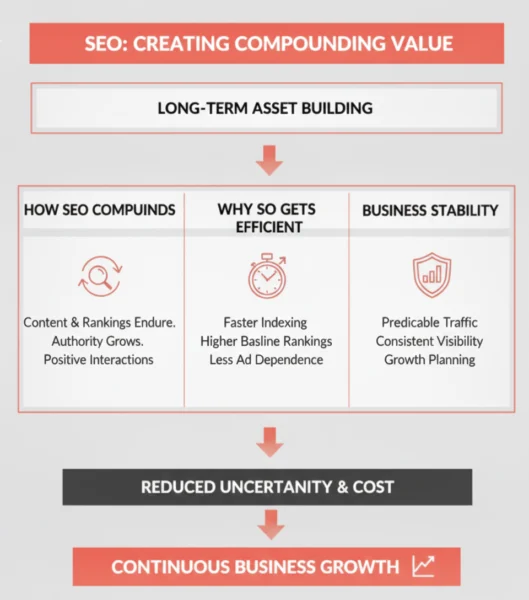
One of the best things about SEO is that its value continues to grow, unlike other online assets which all lifespan and die as soon as the money stops flowing. Unlike short term marketing channels, SEO builds assets that continue to perform over the long haul.
9.1 How SEO Compounds Instead of Expiring
When a website posts good content and gains authority, these improvements do not disappear suddenly. The pages keep bringing in readers, their rankings gradually increasing; trust goes up with every positive interaction.
SEO compounds through:
- Content that keeps ranking and attracting traffic
- Backlinks that strengthen overall domain authority
- User engagement signals that reinforce credibility
- Internal linking that improves discoverability across the site
Each improvement supports the next, creating momentum that grows month after month.
9.2 Why SEO Becomes More Efficient With Time
In the beginning, SEO needs concentrated effort. Once authority has been built and new content is produced, however, it takes less time for that material to rank. Furthermore search engines already view your site as trustworthy, meaning there are fewer obstacles and less friction in future growth projects.
Over time, this leads to:
- Faster indexing of new pages
- Higher baseline rankings across topics
- Less dependence on paid acquisition
- Stronger usage of brand searches and conversions
This efficiency is what makes SEO an investment rather than periodic expense.
9.3 Long Term Results That Support Business Stability
By creating a predictable stream of traffic and consistent visibility over the Web, SEO supports business stability. With organic traffic continuing to flow even during slack seasons or periods of retrenchment on the financial front, enterprises are better able than ever before in these circumstances to plan their own growth.
And in sharp distinction to the cycle of advance planning followed by stopgap measures in terms which growth needs to be justified benefits projected short term chase after spikes of all kinds, steady traffic builds trust naturally; the effect goes far beyond a single unit.
10. Final Thoughts:
SEO returns value because it continues to bear fruit over time. Unlike short term publicity stunts that end abruptly when the checkbook is put away, search engine optimization keeps strengthening visibility and relevance months into the future and often for years after the initial work is done. Each optimized page, every technical improvement, and every authentic signal contributes to a website’s overall authority and performance.
When a website consistently appears in relevant search results, trust begins to build organically. Content that aligns with real search intent attracts steady traffic, and when SEO is treated as an ongoing system rather than a one time task, the results remain visible long term. This sustained approach, often supported through professional SEO services, helps businesses maintain stability in an otherwise unpredictable digital environment.
For businesses willing to invest in it, SEO delivers measurable outcomes. It strengthens brand authority, attracts qualified visitors, and produces results that can be tracked and refined over time. When executed consistently and strategically, SEO evolves into one of the most reliable drivers of sustainable growth available today.
Are you struggling to get more traffic?
Run a free SEO analysis to uncover site issues, competitor gaps, and ranking opportunities.