1. Why Technical SEO Is the Foundation of Website Rankings
How search engines understand, access and rank a website is all up to technical SEO. If search engines find it difficult to crawl or understand the website well enough, the most beautifully-written content will have no chance. When technical SEO is done right, a website is built in such a way as to support visibility, performance, and long-term growth.
Structure, speed, and accessibility are all important factors which search engines use when ranking websites. If technical elements are poorly implemented pages will load slowly, important content can be hidden or mouse-over effects might not come up; indexed pages may not appear in search results at all because of this. Whatever the value of your content may be is drastically limited by these issues directly limiting ranking potential.
A website in good technical health lays a solid foundation for all other SEO activities. Only when content, keywords, and backlinks are working properly can a site realize its potential. Without this basic support, growth is both erratic and unpredictable. Understanding the significance of technical SEO is the first step toward constructing a website which will really take on search results effectively.
2. What Technical SEO Really Means
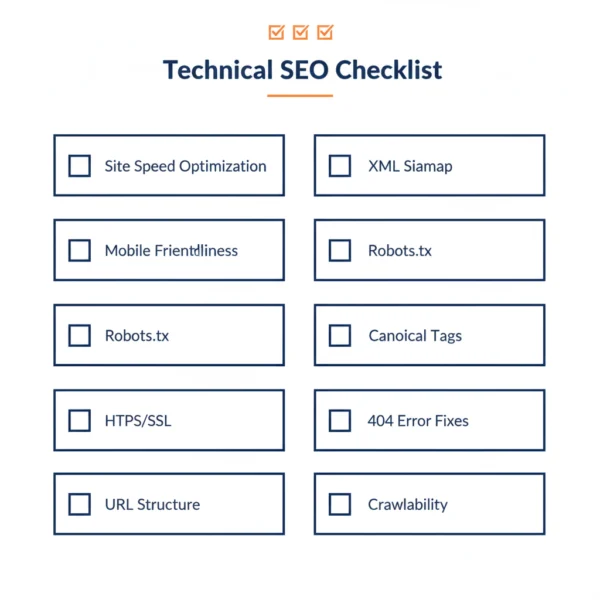
The focus of Technical SEO is on how a website has been constructed, its structure and internal links, and also what aspects of this can be seen and accessed by search engines. It ensures that search engines can find your pages, know what they are about, and index them in the appropriate manner. In the absence of content, no matter how good it is even with a good number of links, there will still be problems with finding it if the basic requirements aren’t met.
The core of Technical SEO lies in the realm of website performance, crawl performance, as well as website structure. This area includes aspects such as page load speed, machine access speed, clean URL arrangements, proper indexing and security for HTTP/HTTPS connections. All these factors dictate for search engines whether a site serves up an accessible and trustworthy experience for the user.
It doesn’t replace content, any more than it does backlinks. Besides that, technical issues make search engines ignore pages, delay indexing, or rank the site below competitors of similar quality. By removing these remainders, you can make all other SEO efforts do their best.
Someone who understands what technical SEO contains will find it simpler to see the value of ranking first.
3. How Technical SEO Directly Impacts Search Engine Rankings
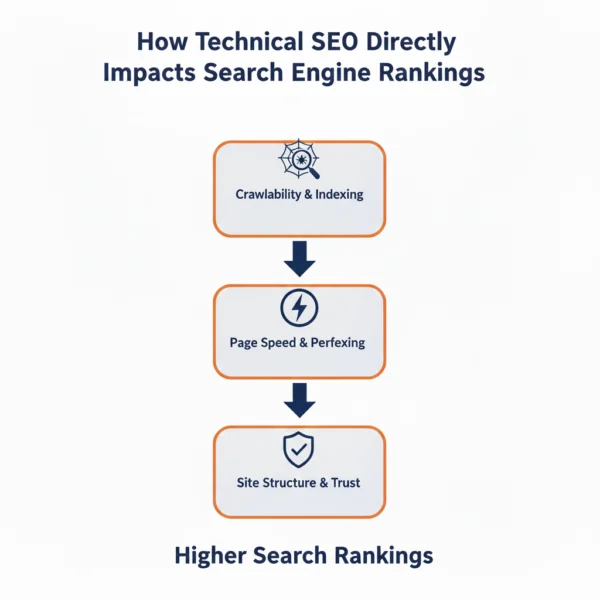
How search engines consider and rank a website depends to some extent on the technical SEO of that site. Even your content might be wonderful, or have lots of backlinks but if the site’s technical foundation is weak it will hardly ever do well. Search engines rely on technical signals to determine whether a website should be trusted, whether it is capable of delivering value to users, and thus they rank sites accordingly.
3.1 Crawlability and Indexing
As crawlers to browse a website. If important text is buried in images or videos, hiding valuable resources. For example, if a site is blocked or part of its code broken, search engines may never see the most significant content in it. Technical SEO captures the insured systems to let all reliable and helpful pages be found properly indexed. This way, search engines are able to include those pages in search results.
The technical factors that back crawlability include:
- Clean URL structures
- Proper internal linking
- Accurate XML sitemaps
- Correct Use of robots instructions
With these bases in place search engines can negotiate the webpage efficiently.
3.2 Page Speed and Performance Signals
Website speed is an established ranking factor. On the one hand, slower pages produce a poorer user experience. Users groping for something to do, instead of being able to complete tasks, have more time on their hands. Search engines interpret these signals as signs that the website is not what users want, as it is slow or otherwise painful to interact with. This in turn can hurt search engine visibility.
Technical SEO will speed up your website by:
- Optimizing code structure
- Eliminating superfluous scripts
- Improving server response time
- Efficiently loading images and other assets
3.3 Mobile Friendliness and Device Compatibility
Today, most people are searching with mobile electronic devices. Mobile friendly websites are given precedence in search engine rankings. If your website cannot display or validate properly for small screens, you will soon lose visibility.
Technical SEO makes sure that these pointers are in place:
- Responsive layouts
- Readable text without zooming
- Easy navigation on touch screens
- Consistent performance across devices
Sites which comply with this basic level of design will outshine competitors in mobile search results.
3.4 Clean Site Structure and Technical Trust
Search engines tend to like sites that are easier to understand. A clean fit into which search engines can slot everything is useful for helping the most important pages get noticed and also serves to organize content in a more search-engine-friendly way.
Technical SEO promotes trust through:
- Logical page hierarchy
- Secure connections using HTTPS
- Proper handling of duplicate content
- Correct status codes for pages
These tips help search engines to see ranked websites with confidence and conviction
Technical SEO does not work on its own. It supports all other SEO work, allowing content or authority signals to be accurately detected and used. The next section provides an explanation of the most common technical problems that don’t allow websites to get higher rankings.
4. How Technical SEO Improves Website Performance and User Experience
When technical SEO is done well, users will have a better experience of the site. Search engines prefer websites that load quickly, run smoothly and provide a consistent experience across all devices. Content won’t perform well if it’s sitting on a poor technical foundation.
Page Speed has always been one of the most important factors. Slow loading pages can cause users to bounce and engagement to decline Technical SEO tweaks file sizes, server response and resource loading in order that pages load faster. Faster web sites enable users to stay with you longer and tell search engines more about their quality.
Mobile usability is also important. A technically sound website will adapt properly to different screen sizes and devices, so that the navigation remains clear, text stays readable and interactive elements all work?. This increases accessibility and means that your site meets the requirements for mobile first indexing.
Technical SEO also improves the stability and security of a site. Secure connections, clean code, and error-free pages reduce interruptions during browsing? When users encounter fewer broken links, redirects, or server problems – and your trust goes up when engagement increases.
By improving speed, Usability, and security, technical SEO creates a better experience for both users and search engines. It is necessary that this balance be maintained in order to achieve higher rankings.
5. Technical SEO Improves Indexing and Crawl Efficiency
Crawlers are important because search engines rely on this technology to find, understand and store web sites. If a website makes the process difficult, even good content may fail to register in search results. Technical SEO makes sure that search engines can access all of your core pages in a user-friendly manner.
A well designed website helps the spiders to move smoothly and rapidly from one page to another. Clear internal linking, proper sitemap formation and appropriate use of robot instructions all guide search engines to valuable content and help avoid these wasted crawls on non-interesting pages.
In addition, technical SEO avoids everyday indexing problems like duplicate URLs, broken paths and accidental page blocks. For as long as these issues continue search engines will probably ignore key pages, or end indexing the wrong versions of them. By solving these problems you make sure that the correct pages enter search results.
Effective crawling and accurate indexing allow search engines to properly assess content. This increases the likelihood of pages ranking well for relevant queries and allows the site to maintain consistent visibility over time.
6. Helps Search Engines Understand and Index Your Website Properly
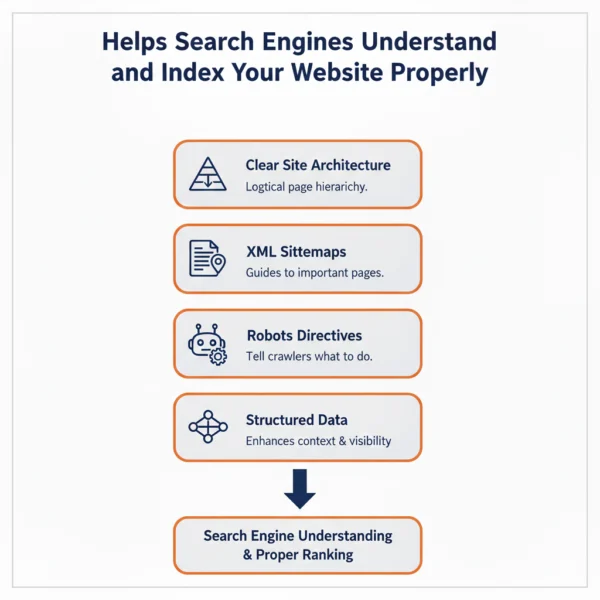
Search engines rely on structure and signals for understanding what a website is about. Technical SEO provides that structure. Without it, even strong content can be misunderstood, ignored, or indexed incorrectly.
A technically sound website makes it easier for search engines to discover pages, understand their purposes, and rank them properly. This begins at the top with a clear site architecture. Pages should follow a logical hierarchy so that search engines can move from general sections to more specific content in a step by step manner, without losing their place or course of direction.
Technical elements such as XML sitemaps guide search engines toward pages that the site owner thinks are important. Robots directives help determine which content search engines should index, and what they should leave alone. Where signals like this are lacking or misconfigured, it will waste their crawl resources on unimportant pages while skipping over valuable ones.
Structured data is also part of understanding the context in which content exists. It helps search engines understand page context more clearly and makes it more eligible for enhanced search results. Although it does not guarantee higher rankings directly, it does add to visibility and relevance.
When technical SEO is managed well, search engines need not guess as often and can spend more time ranking pages correctly. This in turn creates a stronger foundation for content, links and overall search engine optimization performance.
7. Technical SEO Supports Long Term Website Stability and Growth
Technical SEO is not a one-time activity; it creates an infrastructure that will allow the site to grow while maintaining its structure and integrity. As traffic rises, new content is added and its complexity increases, websites that ignore their technical health quickly find themselves losing rankings suddenly dropped overnight off the first page, crawling issues arise or performance problems pop up where none existed before.
A site that is technically sound can adapt better to algorithmic changes in the search engines. When engines update methods of evaluating speed, usability or indexing, a quality website requires fewer adjustments and recovers quickly from them. This stability helps protect rankings as well as preventing periods with no visibility for long periods of time.
Technical SEO also supports expansion. As new pages, blog posts, products or functions or even whole new sites are added to the mix, search engines can find and index them easily enough without encountering any technical snags. Proper site structure, internal linking and a good plan for crawling management all make sure that growth in quantity will never need to mean confusion for search engines.
Over time this build-ups confidence. Search engines prefer websites which are on an even keel, load reliably fast with content clean and clear, and consistently perform. Technical SEO enables this by keeping the website neat, accessible and in line with how search engines judge what comprises quality.
With a strong technical foundation in place, SEO projects become less unpredictable and more sustainable. Content, links and user experience all work better because the website no longer sets limits on them in terms of functionality.
8. Technical SEO Improves Website Performance and User Experience
The technical search engine optimization of a webpage directly determines the way that users experience that webpage. When a site updates fast, performs beautifully on any terminal and doesn’t error-out, visitors are more likely than not to both stay, look around and ultimately convert. Search engines see this kind of behaviour and reward it.
Fast loading pages reduce bounce rates. Users can get what they want without feeling frustrated. Friendly page layout on mobile phones and tablets is good, as most of your search traffic is coming in through mobile devices anyway. Stability in design and code, and a secure connection to the server are also versions of smoothness.
Technical search engine optimization deals more with removing obstacles for users. Broken links, slow pages and crawl errors all create problems that detract from trust. When these sorts of issues are brushed to the side, users can cruise the site with ease and search engines even more read it precisely.
A website which makes good use of its technical aspects has little choice but to support both visibility and ease of use. Get the page ranked higher in search results and give the visitor a few reasons for lingering a bit longer to surf around next time.
9. Technical SEO Creates a Strong Foundation for All Other SEO Efforts
Every portion of search optimization, from content quality and keyword targeting right through to both backlinks to the same site and user experience, builds on a solid technical base. Once you have technical problems, even first-rate content cannot be ranked well in the results pages.
The technically structured website makes it easy for search engines to crawl pages, grasp a site’s layout and index content. It also guarantees that users will enjoy fast load times, clear sailing between pages, and no hiccups while working across devices. All of these are animals which affect page rank directly or else through relationship to how people react.
Without technical search engine optimization, other SEO efforts often fail to achieve good results. Repairing technical foundations first allows both content building and authority building strategies to show the highest results that are possible. It is for these reasons that technical SEO is a necessary step on any website which looks to secure stable rankings, long term visibility and reliable organic traffic.
10. Conclusion:
Technical SEO is not an optional improvement. It is the foundation that allows every other SEO effort to succeed. Without a technically sound website, content struggles to rank, pages fail to index correctly, and user experience suffers. Search engines reward sites that are accessible, fast, secure, and easy to understand.
The visibility, engagement and performance of a site are all benefited by this combination of factors. Once technical points have been corrected, content can have a clear line of vision to its target audience.
Doing it right with technical search engine optimization buys stability for a website. Results show in more stable rankings, less disturbance when an update comes through, easier growth. Instead of running around putting out fires, the website does its work clearly and with efficiency.
Laying such professional groundwork for this type of website has good benefits at all stages of digital growth. It can help bring performance in search engines, especially user trust and satisfaction. And in fact this sort of sound footing for future optimization remains essential for just about any website which wants to go higher-up and stay around.
Are you struggling to get more traffic?
Run a free SEO analysis to uncover site issues, competitor gaps, and ranking opportunities.