
1. Why Email Marketing Still Works
Email marketing still not only remains one of the most effective methods for businesses to get their word out (Human Interest) but it keeps expanding–in many ways now appealing: As soon as we get your email we can keep track like it’s our own doormat! That is not that ordinary feat for content, unfortunately; when other channels explode into pop-ups or banner ads a massive part of the information disappears.
Email marketing may also do as well as it does because people keep checking their mail: They want to hear from you, they look to see if your offer has come in, or that bit of useful information promised earlier is currently available; whatever they need done is what they’re after. When a company respects this environment and sends pertinent content, list members respond affirmatively. That makes email an avenue of emotional tone; trying to sell anything in such a manner goes surprisingly well for trusted friends and other relations who try too much perseverance trying otherwise! In this context advertising speech easily becomes Engagement Marketing Text format As we emphasize in the next section of this article: “After all, when you create your video, make sure it is going to work on handheld devices like a cell phone, as well as on systems that are more technically sophisticated.”
2. What Email Marketing Means in Simple Terms
The practice of email marketing is the practice of sending useful and relevant content to those who have asked for it. These messages introduce a brand, explaining what value-adding services it provides and comforting subscribers that it will care for them as well. Then step-by-step they direct customers who may be curious about products or making a purchase.
It serves as a tool to build relationships. Rather than depending on casual visitors, email marketing enables a company to keep in touch with people who in the past have shown an interest. Each message gets their name out there for good and makes future contact that much easier.
For first-timers, the idea is simple. A subscriber signs up with no hidden agenda, and receives information which is clearly relevant both to him or her and the brand you represent. The aim is not to overload but maintain a regular connection beneficial for both sides.
3. How Email Marketing Works
An e-mail is an example of a simple flow that an amateur can understand even when he knows nothing about the topic. As long as someone takes an interest in a brand, he is in communication with the firm for free and so are they.
By joining the email list, the new subscriber becomes a receiver of free information. This is often done in one of five ways: filling out an application on a website form, leaving one’s email address at the checkout page (or even after checking out), clicking through from a pop-up, following a sign up link shared on social media. Once they join, businesses can send them messages that teach them more about the brand and what they offer.
Each message offers the subscriber some precious information. Often this consists of product details, helpful hints, educational material, or news about new items being produced in future and so on. In this way they receive these still images and gradually come to trust the brand, discovering for themselves the value it brings for them.
At last the subscriber takes some action to himself. This action may be a purchase, a re-booking, an application, or anything else the company would like accomplished. The relationship grows still tighter, as does the wrestling round which it takes place. In a word therefore Ryan, over time interested subscribers willing and capable of receiving new ideas end up as loyal customers.
4. Main Types of Emails a Beginner Should Know
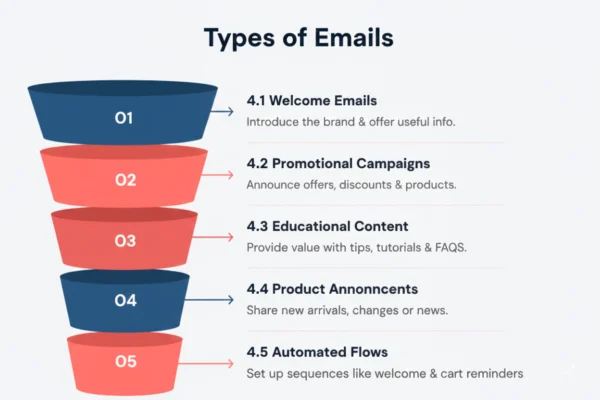
Beginners will find it easier to engage in email marketing after learning about these four main kinds of mails. Each type has a clear purpose and serves a different stage of the customer journey.
4.1 Welcome Emails
The first communication a subscriber receives after joining a mailing list is known as a welcome email. It introduces the brand, tells what you can expect from us and offers useful information that encourages the subscriber to stay with us longer.
4.2 Promotional Campaigns
Promotional e-mails publicise offers, discounts, products launched, and special events. These messages cause the subscriber to take action and directly contribute sales. Beginners can use them to earn a raw but effective increase in revenue.
4.3 Educational Content
Educational emails focus on giving the reader something of value. They could contain tips, tutorials, how-tos, or answers to frequently asked questions. By these bits of information the subscriber feels more knowledgeable and well supported, which in turn helps build trust.
4.4 Product Announcements
These messages disseminate information about new arrivals, changes or news concerning products. They help to keep the customer informed and maintain interest even if there is not a pending sale.
4.5 Automated Flows
After they have been set up as originating messages, automated emails then function without any manual input. They respond to subscriber actions and also help guide people through the buying cycle. Beginners might start with something straightforward like a welcome sequence as well as cart abandonment reminders.
5. How to Build a Healthy Email List
List building should prioritize quality over quantity. Many beginners attempt to expand their list quickly, but with such lists one can have the best engagement and effects when subscribers actually want to receive content from your brand. Respect their choice and your email performance will naturally improve.
5.1 Why Quality Matters More Than Quantity
A small list of interested people is more valuable than a large list with whom the brand’s communication is compelled. Subscribers who choose to sign up are more likely to open the brand’s emails, click through and take action for itself. It improves results and also enables brands to keep an unblemished reputation among inbox providers.
5.2 Permission Based Growth
Subscribers should join because they want updates, not because they are added without consent. Beginning with permission-based growth is essential to establishing trust from the very first moment, despite a reduction in spam complaints. It also means business engages with those people who are most open to finding out more.
5.3 Simple Ways Beginners Can Attract Subscribers
Here are some simple methods beginners can use to grow their list:
- Web form opt-ins to join a list
- Pop ups offering something of value such as updates or valuable resources
- Lead magnets that offer something useful in exchange for an email
- Sign up prompts during checkout for customers who want updates
These tactics perform better as anyone who reads them clearly can see each offer’s value and understand what benefits it has for them.
6. Basics of Good Email Content and Design
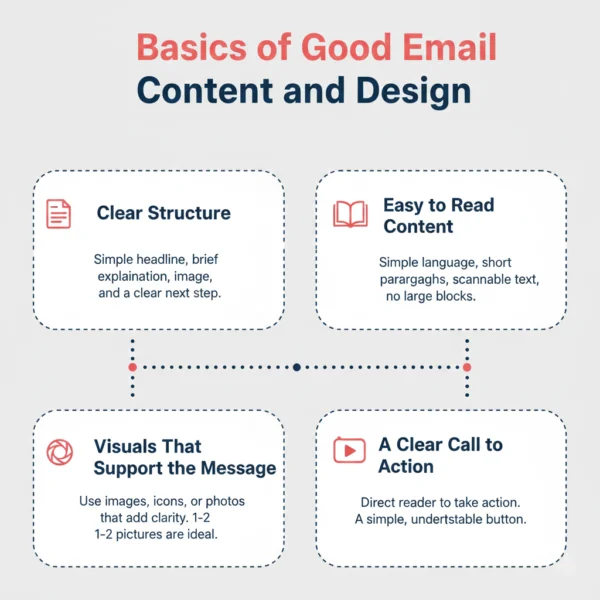
Beginning email marketers often worry about not making their emails perfect. But what really matters are clarity and simplicity. Good content focuses on reader needs, but design also makes the message palatable for people who might have otherwise rejected it out of hand. When both elements collaborate smoothly, emails become all the more enchanting – and in fact more likely to achieve their goal.
6.1 Clear Structure
Clear structure is appreciated by frequent readers who only want their messages understood quickly. This entails a straightforward headline, a small explanation, an appropriate picture when needed, and an obvious next move. A clean layout lets people keep focused without getting confused or distracted.
6.2 Easy to Read Content
Simple language and brief paragraphs bring more readers into an email. Content should easily be scanned, with the reader able to understand its meaning at once. Refraining from one big body of text helps retain attention and engagement.
6.3 Visuals That Support the Message
Images, icons or product photos can complement the message if used correctly. They should bring clarity, not detract from what you are saying. With beginners one or two supportive pictures are the best way to keep their email thinking and extend it.
6.4 A Clear Call to Action
Each message should lead the reader to a particular force of gravity such as more info, verifying a product or new resource. A polite button, simple and understandable, tells people in more workable terms what they should do next. Having an insight into these first principles will make it easier for you to create your own email.marketing concept.
7. Simple Automations to Start With
Simple Automation for Beginners Email automation saves novice users time and brings proper communications effectively. These automated messages operate in the background, addressing directly to subscriber behavior. Even the simplest automation can improve conversion rates and provide a better experience for your audience.
7.1 Welcome Flow
A welcome flow introduces new subscribers to the brand. Typically it contains 1 or 2 emails that thank them for signing up, present the brand and what it does, and provide something useful. This early interaction builds trust and makes subscribers feel comfortable staying on the list.
7.2 Abandoned Cart Flow
A lot of people put items into their cart but do not make purchases, then simply abandon their carts. An abandoned cart flow will remind them of what they have left behind and encourage them to finish the order. This simple automation recovers sales that would otherwise be lost.
7.3 Post Purchase Flow
A post purchase flow supports customers after they make a purchase. It can include order updates, product usage tips, and recommendations for complementary items. This kind of automation increases customer satisfaction and promotes further business. These are the basics that newcomers to email marketing should master well before there is any concept of ‘automation’.
8. The Key Metrics to Track
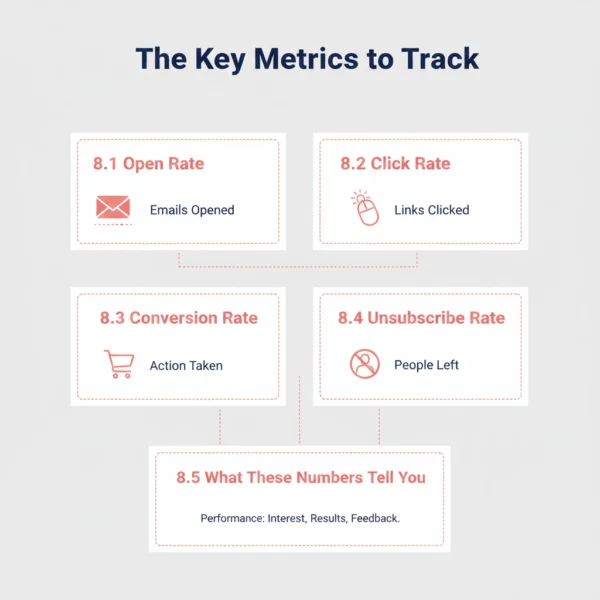
When beginners understand a few simple metrics, they will see how their emails are performing. The numbers reveal what subscribers are responsive to and where there are flaws. In order to ensure that its subscribers continue to find email relevant. Keep on tracking these numbers regularly, to avoid diluting messages or unclear focus.
8.1 Open Rate
The open rate shows how many people opened the email. If the piece had strengths in its title and readers’ solid interest, higher open rates usually suggests that the subject is widely applicable.
8.2 Click Rate
The click rate shows how many people clicked on a link inside this email. This is a metric for finding out whether the content was useful and the call to action clear. A high click rate means our message moves people to work with it.
8.3 Conversion Rate
The conversion rate measures how many subscribers completed the intended action. This could be a purchase, signup, booking or submission. This measure shows the genuine effect of the email on your business results.
8.4 Unsubscribe Rate
The unsubscribe rate tells you how many people eventually left your list after receiving an email from it; this is something nobody wants to happen. An unexpectedly high rate usually means either that content did not match expectations or else the messaging was too frequent.
8.5 What These Numbers Really Tell You
Together these measures indicate how well your email is performing: Open rates reflect interest, Clicks reflect involvement, Conversions show that you have been effective. Unsubscribes give feedback on which parts of your message were not clear to whom they were presented with. In large part, therefore, beginners should use this kind of simple index to carry out fine-tuning for their own emails.
9. Common Beginner Mistakes to Avoid
Beginners often face challenges not because email marketing is complicated, but because a few simple practices are overlooked. Avoiding these mistakes helps maintain healthy engagement and creates a smoother path to growth.
9.1 Sending Too Many Emails
Sending emails too often can wear out your recipients. When people feel ridiculed or overloaded, they are more likely to ignore messages or unsubscribe. Though no one rule fits all situations, a steady and well thought out schedule prevents fatigue from building up while holding attention fixed on your message.
9.2 Ignoring Mobile Friendly Design
Most people read emails on their phones nowadays. Or worse still if the formatting is not clear and easy to read with a small screen, then participation goes into steep decline. Big bold typefaces, simple frames and buttons that are easy for tapping make reading these emails more enjoyable for readers anyhow!
9.3 Writing Unclear Subject Lines
If a subject line is unclear, readers won’t open the email at all. Many subscribers will skip over an email because they find confusing and vague subject lines unacceptable. Clear and transparent subject lines will produce higher open rates – this gives subscribers a better experience.
9.4 Not Having a Plan
Beginners sometimes mail out emails without a clear idea of what they want them to achieve. In the absence of a plan, your content is bound to be dished up in inconsistent portions and therefore less effective overall. A simple strategy setting out what to do and when to do it gives focus, direction, and better results. Avoiding these common errors keeps your email program clean, focused and beginner-friendly.
10. Conclusion:
When digital dummies simplify their mindset on emails and instead focus on clarity, value and consistency, it becomes a breeze. It doesn’t use complex tool machinery or high-end science to get results. A clear message, a good list, a strong small number of basic automations and it is enough to make the whole thing wiser even if slowly but surely.
Next up, we can create a specific plan. Welcome emails first; share content that will benefit them regularly after this step, and check carefully which of our customers like what. Each improvement is built on the last, so you grow confident as time goes by.
Email marketing remains one of the best cost-effective ways to interact with an audience. It can be used for long-run communications, stabilize relationships and show great potential in terms of growth. By taking a simple, structural approach beginners can develop an email marketing system that supports their business and builds durable relationships.
Are you struggling to get more traffic?
Run a free SEO analysis to uncover site issues, competitor gaps, and ranking opportunities.