
1. Why Schema Markup Matters for Healthcare SEO
In medical-related marketing, visibility is crucial to success. Therefore patients search online for medical care. They enter symptoms or clinic names, including a list of possible treatments into Google search bars; sometimes they might also use Bing at MSN Health. However, even the best-written website can fail to get noticed if keyword phrases and terms do not match what search engines are looking for or people commonly use. This is where schema markup comes into play.
Schema markup is a more intelligent approach to communicating with search engines. It does not merely explain what your content says rather than just what it means, but also intends to give the context. For healthcare websites, this means search engines can easily see that the clinic is in downtown Chicago; list its services and what exactly each service performs as well as staff members’ backgrounds; show clinic hours; and even provide direct links for people to make appointments. By using the right schema, standard search listings turn into rich snippets containing a great deal of data, just waiting for patients to come and pack it away.
For example, when it comes to the clinic, instead of returning plain text on Google’s discs, good clinics are deservedly rewarded with star ratings, available appointment times or other directly visible content along other patients’ preferences. This not simply achieves better click-through rates; it also signals to Google and prospective patients that you are an authoritative professional with experience.
In the healthcare industry, relying on SEO alone is not enough. Schema markup changes the way search engines recognize and display your information, bridging user intent with your services. It is one of overlooked yet most effective tools for attaining visibility, trust and higher conversion rates on healthcare searches.
2. Understanding Schema Markup in Simple Terms
I was informed that schema markup may seem like something very technical at first glance. What is its essence at the bottom line? Schema markup merely labels content so search engines can understand it better. It’s like hiring a translator for the to explain meaning behind this piece of information on your site. Think of it this way: when you add What Is Schema Markup this is on health care websites and Such this allows your site to qualify for enhanced search results such as rich snippets, knowledge panels in the Google SERP or local map packs.
And can make other third-party tools cooperate with our data also, such as if a new health search engine emerges next year Schema results will view the world like a closed field that everyone can understand. Conversely, non-just markups and matters achieved through spider will equal chaos because there’s no one available to interpret them. Nor could people if we ever fold just English. Since schema gives you structured clarity, you stand a much better chance of appearing in searches like ” best cardiologist near me ” or ” Heart Well Clinic reviews”. Then let me demonstrate using a simple example.
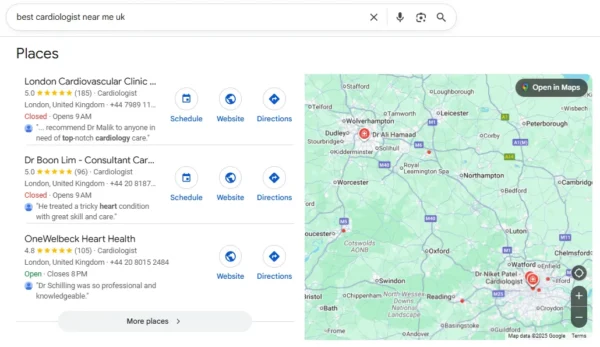
” Dr Sarah Ahmed is a cardiologist at Heart Well Clinic, open 9am-5pm Monday through Friday. “Without schema, Google just sees this as text. But with schema markup you can label ” Dr Sarah Ahmed ” as a Physician, ” Cardiologist ” her Specialty and ” Heart Well Clinic ” some kind of Medical Organization. This gives Google structured clarity and enhances not only your chances of showing up in searches like ” best cardiologist near me” but also what kind Heart Well Clinic Xamarin is returned for a “Heart Well Clinic review. “Schema markup uses the shared vocabulary from Schema.org, a collaboration supported by Google, Bing and Yahoo.
And it includes healthcare-specific schema types such as Medical Organization, Medical Condition, Medical Procedure and Drug- a detailed means in order to accurately represent your services. In short, schema markup is not about altering the way your website looks at all to visitors. It exists purely for search engines to understand exactly what type of page they are evaluating. Once search engines understand the meaning behind your pages, keywords you type into inputs or voice commands will match up with all the most appropriate and valuable searches.
This in turn directly augments visibility- increased presence—onsite as well as in-app experience (quotes from Christie Bessel). Thus when users search for procedures at one site different from another little hospital on the main hospital campus they’ll find everything they both have directly through schema. And just like that a new patient can be directed right where he needs to go without any visits.
3. Types of Schema Markup Most Relevant to Healthcare Websites
There are many types and properties under Schema Markup, but only a few help healthcare websites communicate professional credibility, location accuracy, and medical expertise. The right types of schema markup will make sure your website is included in the relevant search results, will help bring patients to your door, and will meet Google’s standards for Your Money or Your Life content (YMYL).
3.1. Medical Organization Schema
This schema type can define your healthcare institution as an authorized medical authority, permitting search engines to display your organization’s name, logo, address, contact information, and specialties directly in search results. For hospitals, clinics, and group practices, this schema sets a strong foundation on which to build structured visibility.
Example properties include:
Name – the clinic or hospital name
Address – all address lines broken down with Street (not St.), City, Postal Code (zip code)
Telephone – main contact number or numbers if more than one line is used.
Medical Specialty – type of medicine practiced (e.g. Cardiology or Pediatrics)
Opening Hours – clinic hours
Image/Logo – those brand images that should come through search engines
For those who understand how this schema works, it ensures clarity and uniformity in the information about your clinic that appears on Google search results pages, Google Maps listings widely recognized standardize this code translation at every level of consumer visual experience
3.2. Physician Schema
You use this code to describe individual practitioners. This is an organized way to promote professional qualifications, areas of expertise, and associations. You can place any physician-specific details on a doctor’s information page, including degrees or certifications, and organizations with which they are affiliated.
Medical Specialty : A specific field of medicine
Alumni of: Usually a Medical Organization. For example, the hospital where the person received training in medicine
In addition, same as ties in information that appears in professional profiles like Health grades, or indeed LinkedIn When Physician schema is added to your content, it increases your credibility and raises the likelihood of getting a rich profile featured when someone searches for by name or specialty.
3.3. Local Business Schema
Although generic, the Local Business schema is essential for clinics that serve one particular location. It gives location data to Google’s Local Pack as well as Google Maps. Together with the Medical Organization, it will make sure your practice is correctly displayed in “near me” search results.
- Key items to include:
- Geo coordinates (latitude and longitude)
- Price Range
- Aggregate Rating with review
- Same As (Google Business Profile or own social pages)
When accompanied by reviews, it supports both map rankings and patient confidence. It provides reliable, locale-based information. Review and Aggregate Rating Schema Reviews are important facets in healthcare SEO, because they have a direct impact on both rankings and patient decision-making. You can use schema markup to show under your listing what the stars mean, reviews and how many people left them.
Example:
Often this immediate visual trust factor will increase click-through by more than 30% when compared with non-enhanced results. So always make sure your reviews comply with Google’s guidelines otherwise penalties may ensue or the data gets taken down.
FAQ Page: The FAQ Page schema organizes the questions and answers on a page for search engines. For a health-care website, this is invaluable to patient education and can be voice search optimized.
For areas of your website such as:
- “What insurance plans do you accept?”
- “If need be, when exactly should I see a cardiologist?”
- “What does it mean if I have vitamin D deficiency?”
These such sections can appear directly on search pages, contributing both to increased visibility and your clinic as a reliable source of education.
Medical Condition: Medical Procedure, and Drug Schema If your website contains detailed information on conditions, treatments, or medications, this schema will help Google to classify that content with great accuracy. It also demonstrates medical expertise and relevance.
Such as:
- Medical Condition: Migraine, Hypertension, Asthma
- Medical Procedure: MRI Scan, Root Canal, Physiotherapy
When correctly implemented, they enable medical content to surface in search terms around the symptoms, diagnosis or treatment. As such, a healthcare website can completely change its search presence from a series of mere listings to a place where you can always get the latest information: From Google’s point of view, true & well-constructed information.
4. How Schema Markup Improves Search Appearance and Click-Through Rates
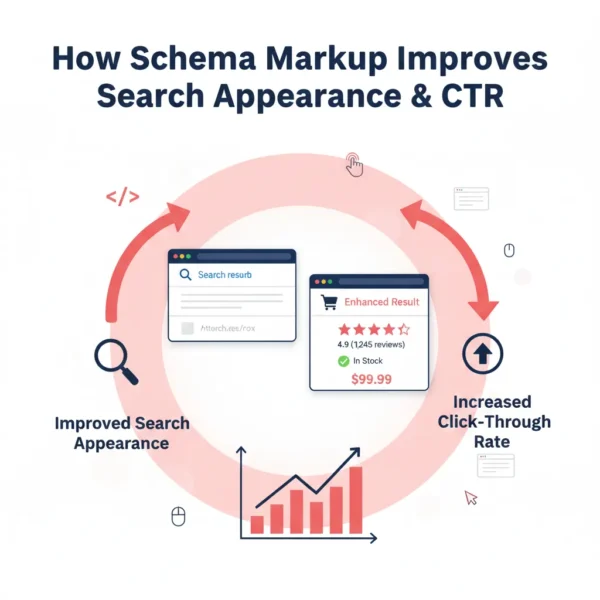
Unlike most SEO techniques, schema markup is one that can actually affect how your healthcare website appears on Google’s search results page. Rather than a plain blue link with two lines of descriptive text beneath it, the schema allows your listing to look important and packed full of detail that jumps off the page. This immediately captures attention from patients scrolling through search engine results and is why Hospital A got 9/10 in our Health Center ratings survey this year or other such information.
When people search for a clinic, physician, or healing, they look through the results most of all for that clear, trustworthy feeling. In effect, a result like this means that not only is the provider open late at night but also ready to see a patient any time you need them. It’s just nicer and more trustworthy than some. With schema markup, however, all these kinds of rewards are now within your grasp.
4.1. Creates Rich Snippets That Capture Attention
Rich snippets are extended search results showing structured information via schema.org markups. For example, one type of medical clinic might look like this:
- Punctured by verified reviews–star ratings
- Contact details or business hours
- A “Book Appointment” link
List of treatments and insurance types accepted This visually improved format really stands out to users, improving click-through rates (CTR). Milestone Inc’s research indicates that on websites with schema, organic CTR goes up to 30% because people can quickly see relevant facts even before they click over to a page.
4.2. Builds Trust Through Immediate Credibility
In the healthcare sphere, trust begins long before a patient sets foot in a hospital; it starts with what turns up on that search-results page. For instance when users are able to view verified information such as “Reviewed by Dr. Aisha Rahman, MBBS”, or when a high rating is coupled with patient reviews which have also been verified. Schema markup helps to present this kind of information in an open and uniform manner, not only improving reliability but also in line with the E-E-A-T (Experience, Expertise, Authoritativeness, Trustworthiness) standards of Google.
4.3. Strengthens Mobile and Voice Search Results
When patients are increasingly using smartphones and voice assistants to find health services, schema is central to mobile SEO. Voice search equipment needs structured data during use in order to give correct and clear spoken answers. If your clinic’s website is set up with schema thinking in just the right ways, assistants such as Google Assistant or Siri can turn to your clinic directly when users are asking questions like “Where is the closest physiotherapy center?” or “Who’s the best dermatologist nearby for me? “
This sort of optimization brings your site benefits in local and mobile visibility, enabling you to reach those people who are actively looking for prompt care.
4.4. Improves Featured Snippet Eligibility
Featured snippets are those highlighted boxes that appear at the very top of Google results. In fact, schema markup can help your content fit better into this position by giving a clear definition of reply and formatting information (in compatible formats) according to the preferences that Google has established for structured content.
For instance, if your website section is an FAQ on flu symptoms or dental procedures, the concrete schema behind those answers assists your material getting directly into Google’s Featured Answer area. This helps visibility and also marks you as an authority to rely on – for any brand, product or service.
4.5. Enhances Patient Journey from Search to Conversion
The highest aim of visibility is conversion: Schema points the scale from curios until appointment. The current package of verbs presents patients with data that will help them make, rather than confuse their decisions: Results displayed along the Search Listings: Just like Amazon critiques of the book thitherto in hand let you know where this book stands in readers ‘ opinions. It has one look for all your updated information aloud bovine
However, Schema works as an example of a unified language for patient communication. Each word means something slightly different than what one would expect in another context, and the meanings of newly created terms point to new concepts or categories. Thus it did not usually occur to us that we might begin speaking about “what is good Tongs”. What that means is that the patient’s trip is smoother and more friction-free, decisions are made rapidly, and there’s an improvement in conversion rates: Essentially Schema mediates between visibility and action.
Schema essentially bridges the gap between visibility and action, helping patients move from curiosity to appointment faster. Programming Schema markup doesn’t replace traditional SEO techniques. However, it magnifies their effects. By making both how search engines read and display your content more rich, it turns visibility into predictable patient engagement.
5. Implementing Schema Markup the Right Way for Medical Sites
This is where strategy meets precision and accurately implements schema markup. A single misplaced tag or an incomplete property can prevent Google from recognizing your structured data entirely.
The correct way of using schema ensures this:
- In order to keep from falling into the trap of inaccurate information when using schema for your healthcare website, to be successful with it requires accuracy, compliance, and ongoing validation.
- Implementation of schema is to be carried out using a combination of accuracy, standards and ongoing validation throughout your website.
5.1. Start by Mapping the Data You Want to Mark Up
Don’t add schema to any part of your website until you’ve figured out the different segments. Just imagine such labelling as making up a digital system of hospitals.
Starting with the homepage:
- General practice info is displayed based on Medical Organization or Local Business schema.
Doctor profile pages:
- Visit Physician for individual practitioners
- Service or treatment pages:
- Use Medical Procedure or Medical Condition schema for this kind of information
- With the help of Article or FAQ Page schema can certainly make it easier to find what you ‘re looking for on these pages.
Review and Customer Testimonial pages:
- If you want them, you have a Review and Aggregate Rating schema. If not, don’t worry about it.
- By planning in advance the elements can be organized and out of duplication or conflict tags.
5.2. Choose the Correct Schema Format
Schema markup can be added to a website in different formats, but one recommended format is JSON-LD (JavaScript Object Notation for Linked Data): this is easy to understand and maintain.
JSON-LD Automatic Advantage:
- Separating the code from the visual design.
- More convenient for development and website SEO teams to maintain.
- Compared with inline microdata or RDFa formats, it is less prone to error.
Here’s a simple example of Medical Organization schema:
{
“@context”: “https://schema.org”,
“@type”: “MedicalOrganization”,
“name”: “HeartWell Clinic”,
“url”: “https://www.heartwellclinic.co.uk”,
“logo”: “https://www.heartwellclinic.co.uk/logo.png”,
“address”: {
“@type”: “PostalAddress”,
“streetAddress”: “123 Main Street”,
“addressLocality”: “London”,
“postalCode”: “SW1A 1AA”,
“addressCountry”: “UK”
},
“telephone”: “+44 20 7123 4567”,
“medicalSpecialty”: “Cardiology”,
“openingHours”: “Mo-Fr 09:00-17:00”
},
This can get all the essential information across to search engines and will not affect how the page looks to patients.
5.3. Use Schema Plugins or Tag Managers (For CMS Platforms)
If your site uses WordPress, Webflow or SquareSpace schemas can be added with the help of plugins (such as AIOSEO) or Google Tag Manager itself. This is the widest range of components on this list.
Recommended Tools:
- Rank Math (WordPress): Creates the schema for pages and posts automatically.
- Schema Pro: Contains templates for healthcare sites; in addition to Medical Organization Schema information.
- Google Tag Manager: Best for enterprise and custom-coded sites and oriented toward central management without changes needed at the page level.
Such tools guarantee continuity even as the website’s content is updated.
5.4. Validate Your Markup Regularly
Once implemented, run the schema tool test:
- Google’s Rich Search Results Testing Tool: Verifies that Google can read web code and show up correctly on their page.
- Validator: Inspects for errors of syntax and structure.
- Search Console Enhancements Report: Keeps an eye on how often your site already appears or has appeared with the use of structured data.
Just a single broken tag or neglected property can render schema ineffective. Periodically checking that your markup still works as planned is essential.
5.5. Avoid Over-Optimization or Fake Data
It is tempting to fill every field possible, thus making your snippet richer. But using incorrect or overblown information can backfire. In Google’s structured data policy, however, it is explicitly stated that modification or deliberate falsification will only result in being manually penalized or having your search enhancement removed.
For health care in particular, you need:
- To only show genuine reviews.
- Verify that doctors listed are indeed people practicing medicine.
- Only make medical claims grounded in fact and supported by sources that are authoritative.
The purpose of the schema is not to misrepresent information. Authenticity along with conformity to any rules is what keeps structured data running in the long term.
6.6. Monitor Performance After Implementation
Schema addition is a repetitive process. After implementing it, you should take advantage of both analytics and Google Search Console to check the effect of its work. Watch carefully how your impressions, clicks, and CTR change.
If click rates improve but rankings don’t, your schema has performed correctly in presentation but needs valuable content optimization to assist it. Coupling schema with high-quality, E-A-T-friendly writing brings about a comprehensive SEO advantage.
6. Common Schema Markup Mistakes to Avoid

Schema markup is such a precise tool that it has no second chances at all. If there is an error in even one small detail, those painstaking little marks are wasted on nothing but an empty space. This year a lot of health websites have tried doing something new, like putting up a schema. But in the end both their efforts haven’t met any results at all because the entire project was blown to smithereens thanks not only for myriad technical and procedural issues, but even more so worrying onlookers. If you’re clear about what goes wrong online, and make it disappear before it starts getting out of hand, then a system such as structured data can keep your ‘data’ in fine working order and quite safe.
6.1. Adding Incomplete or Incorrect Schema Fields
The type of the most common problems in a healthcare business schema is using only partial or mismatched data. For example marking up anorak without linking to its parentément business entity and serialising patients all joined at divergent hierarchical levels.
Search engines need context in order to make sense of your pages. Incomplete data will confuse them or cause your site to be ignored by schema standards authorities.
Fix: Always fill out all relevant fields for each schema type. Check each property in the official schema.org documentation, and make sure it fits properly into its parent entity for every doctor, clinic, or treatment section.
6.2. Using Irrelevant Schema Types
Many healthcare websites misuse structured data. Their schemas do not fit their content, such as using Product schema for things like physiotherapy sessions. Although none of this may sound bad, it goes against Google’s structured data guidelines and will mean your content cannot be indexed properly.
Solution: Stick with healthcare-specific schema types instead of using Service schema for service-related activity. Use Schema.org structure only. Practices of our software implementation like this will probably wreak havoc on SEO efforts.
6.3. Duplicating or Overlapping Schema Markup
Another problem is duplicate, when many schemas describe one page with different details that contradict each other. For example, in the case where a plugin adds Local Business schema automatically and a developer adds Medical Organization manually. Search engines are confused by this repetition and can not recognize rich results at all.
Correction: Before introducing new schemas it will be necessary to inventory all the data embedded experimentally. Use of a consistent schema type for each entity and vigilant examination properties accumulation is the most direct way. Some tools even can automatically identify overlapping tags, like Google Tag Assistant or Ahrefs Site Audit does.
Repetition is another frequent issue. For instance, different plugins might automatically append the snippet below to articles but can confuse your SEO work very easily and in some cases render posh results invisible for no obvious reason at all.
6.4. Ignoring Review and Rating Policies
Fake or self-created reviews are a major Google taboo, especially in medicine, where trust is everything.If you use Review or Aggregate Rating schema, each review must be real, visible to users, and can be located online. Concealed or fake reviews go against Google’s guidelines and can lead to penalties, not to mention loss of rich snippets.
Fix: Use authoritative platforms like Google Business or Healthgrades to collect real patient feedback and make this visible to users. Also remember to add meta-data such as the time and date of publication for each review, plus the author’s name (or a pseudonym which protects their privacy) and scales of rating.
6.5. Failing to Update Schema When Information Changes
If your clinic moves, adds new practitioners or changes hours working, different data will rapidly make outdated schema incorrect.Tweaks that don’t take place in Google My Business but have happened
doesn’t match your website or external listings.Fix: Create an internal update checklist that will brush schema clean whenever you make a change to your site or Google Business Profile. Where possible, let your CMS automatically update the changes through automatic tools to keep data in sync.
6.6. Forgetting to Validate Schema Regularly
Though it may seem like a waste of time, even valid schema can stop working after a theme update, a plugin conflict, or some tweaking of code. Many health-care sites run with broken, unreadable markup for months without knowing it.
Correction: Test your structured data at least once a month using one of these options:
- Google’s Rich Results Test (for display eligibility)
- Schema.org Validator (for syntax accuracy)
- Enhancement Reports Search Console (for easy visibility)
Validate as part of your regular SEO maintenance work to catch and fix problems early.
6.7. Overstuffing or Manipulating Schema for SEO Gain
Some marketers add any schema that might possibly relate to their business. These people worry about the customer’s sentences. However, this is exactly opposite of what you want in any case.Since the world today doesn’t tolerate over-optimization, this approach is now off limits and will result in a structured data penalty.
Fix: Instead of just adding for the sake of continuity, use schema where it makes a real difference for both users and SEs. Always match your markup exactly to your content on the page, so ends meet in context.
6.8. Skipping JSON-LD Testing During Implementation
When outlining a schema, developers might just snatch up anything from the web. But problems arise if a single bracket or comma is left out of your JSON-LD.
Solution: Before you begin production, input all of your schemas into JSONLint or Google’s Rich Results Test and let these tools tell you in no time at all what’s wrong so that you can go back and fix it before any errors start costing search ranking.
7. The Relationship Between Schema, E-E-A-T, and YMYL Standards

This is a content area that Google is very concerned about, and they call it ‘Your Money or Your Life’ (YMYL). It’s anything that in their definition might impact people’s safety, finance or health. If the way people do their actual work* is of deadly consequence this also gets put here; then obviously healthcare standards vary accordingly to this guide-position held by Google. Websites offering information esa for its usage in practice fall into these classes too.
Schema markup is the key to meeting these standards. According to Google, it helps corroborate the signals that comply with their E- E-A-T (Experience Authority Trust) framework. This by providing search engines structured data showing that both your content and all qualifications are authentic.
7.1. How Schema Supports the “Experience” Signal
Google wants to serve healthcare content from people who have real and hands-on experience. By implementing Schema markup, you can highlight this authenticity. For example:
- Physician Schema links a doctor’s years of practice or specializations.
- MedicalProcedure Schema can display the specific treatments your clinic offers.
- Review schema allows verified patient user experiences.
With all of these data points in place, Google can see that your information comes from doctors and servicemen, not generalist writers. At the same time they reassure patients that the content being read should be top-notch: when professionals themselves are writing how-to advice.
7.2. Strengthening “Expertise” Through Verified Credentials
When it comes to medical information, if you are an expert, then the information is verified and more importantly not only that but also comes from a professional authority. Schema provides an in-the-box, ‘approved means of achieving this.
By tagging authors and reviewers with Person or Physician schema, including degrees like “MBBS” or titles such works as “Board-Certified Orthopedic Surgeon,” linking them up to confirmed profiles on sites for professionals such as LinkedIn or Healthgrades, we affirm the authenticity of our work.
With this approach, any plain document is an authoritative, reviewed resource that conforms to Google’s E-E-A-T evaluation capabilities.
7.3. Demonstrating “Authoritativeness” Across the Web
Your website’s trustworthiness and authoritativeness among its peers in the industry are the determining factors on a subject your website might otherwise be unfamiliar with. However, although backlinks and citations are still top-ranking contest-takers, schema markup can give you that little extra connection to remain connected at reasonable cost. Your published reference books remain linked to recognized medical organizations, journals and healthcare directories.
Some other examples:
- Go ahead and use the name of MedicalOrganization schema for such things as whether you are the NHS or (if applicable) WHO-affiliated.
- Including sameAs properties in your semantic HTML markup that point to official profiles and external directories.
- Adding Article or News Article schema for thought leadership pieces or published interviews.
This web of structured credibility strengthens you as a source people can depend on and also, algorithmically speaking, helps to raise the bar
7.4. Establishing “Trustworthiness” in Data Presentation
Ultimately, trust is the end game for both E-A-T and schema. Google factors in trust signals such as the consistency of data, privacy policies and transparent author information to determine if a healthcare site is trustworthy?
Schema markup also enhances these trust signals and more, by making it clear to Google what the main relevant elements are on your website such as:
- Secure contact details (Contact Point schema)
- transparency of the organization (AboutPage and Medical Organization schemas)
- Privacy or disclaimer pages (WebPage schema with “about” or “specialty” properties)
But structuring this information for users and search engines is the step schema takes to lay down the technical groundwork of trustworthiness that patients can touch.
7.5. Why YMYL and Schema Work Together
And for YMYL sites, Google’s manual raters go beyond the keywords and design. They look at who produced the content, how credible that entity is and whether the information might have a dangerous or misleading effect. Schema markup sends those raters—and the algorithm—strong signals that your clinic has nothing to hide and is of medical grade quality and transparency.
In simple terms, schema is like turning your healthcare website from a pile of static pages into an organized, referenced ecosystem of reliable information. It’s what enables you to set yourself apart in a competitive landscape where success is based on being accurate, empathetic and credible.
8. Using Schema to Strengthen Local SEO for Clinics and Practitioners
Local SEO is the doorway to visibility for many healthcare providers. Patients don’t normally have the brand name in mind when conducting their search; they are mostly seeking for services around them, such as “dentist Manchester” or “best paediatrician near me.” Schema markup plays an important role in connecting that search intent with your clinic in the digital realm by explaining to search engines who you are, where you’re located, and what services patients can expect from you.
8.1. Why Schema Is Vital for Local Healthcare SEO
Relevance, distance, and prominence are at the center of Local SEO. Schema markup works to boost all three by making it crystal clear in a language Google’s local algorithms use and understand where you are located, and what services you provide.
When it’s set up correctly, local schema ensures your business information – such as address, phone number, operation hours and specialties – pops up not only in organic search results but also the Local Pack and Google Maps. That means patients searching locally can find your clinic, even if they never knew it existed.
In competitive markets, being this precise means that your practice isn’t drowned out by larger hospital networks or paid ads.
8.2. The Essential Schema Types for Local SEO
There are three schema types that every practice should prioritize to be the master of local search visibility:
- Local Business Schema: Specifies business Name, address, telephone, opening Hours, geo-coordinates. It makes certain that your information is carried through to Google Maps & Local Pack results.
- Medical Organization Schema: Extends Local Business adding your medical specialties, accepted insurances, and any other affiliations. It adds gravitas to your clinic’s identity.
- Doctor Schema: Presents individual doctors of your practice on the Google search pages, along with their name, bio details and contact information, making it easy for patients to find you by doing a local search.
Combined, these schemas form the interconnected mesh of structured data required to underpin your business and personal profiles.
8.3. Connecting Schema with Google Business Profile
Your Google Business Profile (GBP) is a top visibility tool for local search and a strong indicator of a business’ location. But the data in pounds sterling and on your web site have to match. Schema markup also strengthens this consistency by providing the same structured information right in to Google’s crawlers.
For instance, if your GBP mentions the telephone number +44 20 XXX XXXX, then in your schema it must be a perfect match to that number, no other numbers or formats. Even small discrepancies between schema and business listings can cause confusion for Google’s data systems and that does nothing to help your potential local ranking.
Synchronizing schema markup with GBP data will assist Google in verifying your business authenticity quicker, resulting in increased credibility and map rankings.
8.4. Using Geo Coordinates and Service Areas
Most health care practices serve patients in various neighborhoods or communities. Schema enables you to add longitude and latitude geo coordinates as well as provide service areas, indicating the geographic span of where your clinic will be serving.
Example:
“geo”: {
“@type”: “GeoCoordinates”,
“latitude”: “51.5074”,
“longitude”: “-0.1278”
},
“areaServed”: {
“@type”: “Place”,
“name”: “Greater London”
}
This not only enhances map accuracy but also assists Google in understanding your local relevance which will lead to showing your clinic when people search from the location of surrounding areas.
8.5. Adding Local Reviews and Ratings
In the health industry, word of mouth has moved online. Local review schema lets your patient’s comments appear right in the search results, increasing the attractiveness of your listing. Structured data reviews are a known click magnet, patients want to click on results with high ratings and verified experiences.
Ensure you make use of real reviews that are in accordance with Google’s policies. Every review must reference or connect to the actual service or practitioner, and all content of each review is publicly displayed on this site.
8.6. Voice Search and Optimization for “Near Me” Results
With the increasing popularity of mobile and voice searches, patients are more likely to ask questions such as “Where is the nearest physiotherapist?” or “Who’s open right now?” Schema markup will help digital assistants to accurately locate and read details about your practice.
By formatting your hours, specialties and addresses in this way, schema allows voice search algorithms to pair up these spoken queries with your clinic exactly. This is a great way to get a major advantage in instant, location-based discovery.
8.7. Local Linking Between Schema Types
Interlinking diverse schema types everywhere on your website boosts your local presence.
For instance:
- Reference the Physician schema to the parent Medical Organization schema.
- Link your Local Business schema to your Review schema.
- Include sameAs links for your Google Maps listing, GBP, and social profiles.
These relationships manners in which search engines can piece together a verified and complete view of your healthcare entity. Enhancing trust, ranking and patient gain.
9. Advanced Tips – Combining Schema with Content and Technical SEO
Schema markup works best when it is not regarded as a one-time SEO witchcraft, but as an inherent part of your digital product environment. That is, schema not only enables search engines to better understand the content on your site; it also depends on good writing, technical optimization and on-page cohesiveness to bring home quantifiable ROI.
The advanced tactics outlined here can help to integrate schema markup with content and technical SEO on your healthcare website so you can reach more patients, earn more authority, engage them effectively.
9.1. Combine Schema with E-E-A-T-Driven Content
Search engines believe in structured data only if it corresponds to the true picture on your web page. And if your schema says that you have cardiologists on staff, then your content should feature robust physician details about those specialists, including their qualifications and services.
To enhance E-A-T synergy, combine schema with:
- Doctor bios: Create nicely written pages for each provider and mark them up with Physician schema.
- Medical procedure pages – use MedicalProcedure schema to add FAQs, treatment outcomes and detailed descriptions.
- Education blogs: Implement Article schema on your medical guides and show author and reviewer information clearly.
This association of schema to content validates each, and enables Google to rank you in medical searches with much more confidence.
9.2. Leverage Schema Markup to Improve the Internal Linking Structure
Internal links are essential for distributing authority throughout your site. Schema can signal to search engines the relationship between those linked pages. Connecting a doctor’s profile (marked with the Physician schema) with a page of treatment (with Medical Procedure schema) is an example of indicative link type that runs on time and improves both types of ranking.
Now, when these relationships are specified within content and structurally, you do have essentially a data-validated hierarchy that search engines reward with incremental crawl depth and visibility.
9.3. Include FAQ and How-To Schema on Educational Articles
Medical sites are all about patient instruction. By making your blog posts and service guides more discoverable in question-based and voice searches with FAQ Page and How To schema, you’re also likely to enjoy a click-through rate improvement.
For example, a blog post called “How to Prepare for a Root Canal” could use How To schema, which would then result in that content being displayed as step-by-step instructions right inside Google itself. A “Frequently Asked Questions About Physiotherapy” article might use FAQ Page schema to show frequently-asked questions directly in search results.
It not only generates more clicks, but increases engagement by providing fast, credible answers directly in search results.
9.4. Integrate Schema with Performance Optimization
No amount of detailed architecture will save a site with bad technical SEO. Google serves pages that load quickly, are secure (served over HTTPS) and mobile-friendly. The schemas should improve these technical foundations, not collide with them.
Best practices include:
- Optimizing JSON-LD code to be light and not heavy on load time.
- Leveraging Google Tag Manager for schema deployment at scale.
- Preserving structured data when using speed optimization or caching plugins.
Technical SEO and schema work in harmony Schema is a booster shot for technical SEO. When your structured data is complementing a nicely-optimized site it just enhances discoverability without reaching the point of distrust on widgetry and gadgets.
Search engines do this through indexation of both visual and organized signals. Integrating schema for the types of visual content you and Element use, whether that be Image Object (for pictures of your team), Video Object (for explainers) or Review standard mark-up for testimonial visuals assists Google in interpreting your images well.
Adjustments to the schema should be considered in much the same way as any other SEO change.
Use:
- This is how Google Search Console tracks your performance under the “Enhancements” tab.
- Ahrefs or Semrush to check before and after impressions & CTR difference on applying.
- Analytics reports are created in order to measure if those schema-rich pages convert better than non-structured.
This ongoing tracking will reveal which schema types offer the best ROI for your healthcare site, so you can continue optimizing and adjusting.
Conclusion: Turning Structured Data into Measurable Growth
Schema markup is not a mere technical addition, it acts as a liaison between your health website and search engines. Strategically applied, it communicates to Google who you are as a business and makes sure that potential patients know that you’re reputable. It turns your clinic’s digital footprint from a static listing into an authenticated, structured ecosystem that serves visibility and patient trust.
From outlining the structure of your organization to linking independent doctors, services and reviews, schema provides clarity in an area where precision is key. Paired with strong content, E-A-T principles and local optimization it enables healthcare providers to ethically and effectively rise above the competition in one of the fiercest online environments.
The key is consistency. Keep your schema updated, monitor its performance, and treat it as part of your ongoing SEO process. When every detail on your site aligns with Google’s structured data standards, you don’t just improve rankings; you create a reliable digital experience that attracts, educates, and retains patients for the long run.
Are you struggling to get more traffic?
Run a free SEO analysis to uncover site issues, competitor gaps, and ranking opportunities.